Introduction
Choosing the right facility for hip care is a pivotal decision that directly impacts your mobility, independence, and overall quality of life. Whether you are dealing with chronic joint pain or require a surgical intervention like a hip replacement, the environment in which you receive care matters. As hip-related issues become more common, the demand for specialized orthopedic and hip care has grown, leading to a wide array of options for patients worldwide.
Selecting the best hip hospitals is not merely about finding a clinic with the most modern equipment; it is about finding a destination where skilled specialists, advanced surgical techniques, and comprehensive rehabilitation programs converge. Patients often evaluate hospitals based on surgeon expertise, the range of available treatment options, technological capabilities, rehabilitation support, safety standards, and patient care services. This guide is designed to help you navigate this process, empowering you to make an informed healthcare decision that prioritizes your long-term joint health.
What Is a Hip Hospital?
A specialized hip hospital, or an orthopedic-focused center, is a healthcare facility dedicated to the diagnosis and treatment of conditions affecting the musculoskeletal system, with a primary focus on the hip joint and surrounding structures. While many general hospitals provide orthopedic services, specialized hip centers concentrate their resources, nursing staff, and diagnostic tools specifically on joint health.
The Specialized Advantage
These centers typically feature dedicated hip and joint care departments. By focusing on high volumes of specific procedures, these hospitals foster an environment of continuous improvement. Common conditions treated in these settings include:
- Hip Arthritis & Osteoarthritis: Gradual wear and tear of joint cartilage.
- Hip Fractures: Often resulting from injury or reduced bone density.
- Joint Degeneration: Chronic breakdown of the hip structure.
- Hip Injuries: Sports-related trauma or soft tissue damage.
- Avascular Necrosis: Loss of blood supply to the bone.
- Congenital Hip Conditions: Issues present from birth that require specialist correction.
- Chronic Hip Pain: Persistent discomfort that limits daily function.
Why Choosing the Best Hip Hospital Matters
Your hip joint is a complex “ball-and-socket” structure that supports the weight of your body. Problems here can cause secondary issues in your back, knees, and gait. Choosing a top-tier facility matters because:
- Accurate Diagnosis: Advanced diagnostic tools ensure that the root cause of your pain is identified, preventing unnecessary or inappropriate interventions.
- Experienced Specialists: The expertise of the orthopedic surgeon is the single most significant factor in the success of any hip procedure.
- Integrated Facilities: A facility optimized for hip care ensures that everything from your pre-surgical workup to your post-operative physiotherapy occurs in a coordinated fashion.
- Recovery Planning: Success isn’t just about the surgery; it’s about the recovery. Leading hospitals prioritize physical therapy and long-term joint care to ensure you regain optimal function.
Key Factors to Consider When Finding the Best Hip Hospitals
1. Experience and Expertise of Hip Specialists
Look for orthopedic surgeons who are board-certified and have fellowship training in hip preservation or joint reconstruction. Inquire about their volume of hip procedures and their experience with your specific diagnosis.
2. Hospital Infrastructure and Orthopedic Facilities
A dedicated orthopedic department should be equipped with modern operating theaters that maintain high standards of sterility. On-site diagnostic and rehabilitation facilities allow for a seamless transition from assessment to post-operative recovery.
3. Advanced Hip Diagnosis Facilities
Effective treatment begins with precise imaging. Hospitals offering high-resolution X-rays, MRI, and CT imaging provide a clearer picture of joint health. Some facilities also offer bone density evaluation to assess skeletal integrity. Note that the availability of specific diagnostic equipment is not publicly stated for every institution.
4. Hip Treatment and Surgery Options
The best hospital for hip replacement surgery offers a spectrum of care, starting with non-surgical management (like physical therapy and injections) before moving to surgical options only when necessary. This demonstrates a patient-first approach.
5. Expertise in Hip Replacement Surgery
For those requiring a total or partial hip replacement, the choice of implant and the surgical technique (such as posterior or anterior approaches) are vital. An experienced team will discuss these options with you, tailoring the plan to your anatomy and activity levels.
6. Multidisciplinary Hip Care Team
Effective hip care requires collaboration. Your team should include orthopedic surgeons, physiotherapists, rehabilitation experts, pain management specialists, and nutritionists, all working together to manage your care plan.
7. Hospital Quality and Safety Standards
Prioritize hospitals that maintain rigorous infection prevention and patient safety protocols. Information regarding specific institutional safety ratings is “Not publicly stated” for all hospitals, so do not hesitate to ask during your consultation about their surgical infection rates and safety practices.
8. Rehabilitation and Recovery Support
Rehabilitation is the bridge between surgery and returning to your normal life. The best centers have on-site physiotherapists who begin movement protocols shortly after surgery and provide a personalized long-term joint care plan.
Types of Hip Treatments Available at Specialized Hospitals
Non-Surgical Treatments
Many patients find relief through:
- Physical Therapy: Targeted exercises to improve muscle strength around the joint.
- Lifestyle Modifications: Adjusting daily activities to reduce joint stress.
- Pain Management: Conservative approaches to minimize discomfort.
- Medication Support: Using anti-inflammatory drugs or other therapies to manage symptoms.
Surgical Treatments
When conservative methods are insufficient, surgical options may include:
- Total Hip Replacement: Replacing the damaged joint with a prosthetic.
- Partial Hip Replacement: Replacing only the damaged part of the hip joint.
- Hip Resurfacing: A bone-conserving option for younger, active patients.
- Fracture Repair: Surgical stabilization of broken hip bones.
- Revision Hip Surgery: Replacing or repairing an old hip implant.
How to Compare Different Hip Hospitals
| Evaluation Factor | Why It Matters |
| Hip Specialist Experience | Determines the precision and success rate of your treatment. |
| Orthopedic Facilities | Facilitates a smooth journey from surgery to recovery. |
| Diagnostic Technology | Allows for a highly accurate and personalized diagnosis. |
| Treatment Options | Ensures you have access to non-surgical and surgical paths. |
| Surgical Expertise | Minimizes risks and speeds up post-operative recovery. |
| Rehabilitation Support | Crucial for regaining mobility and functional strength. |
| Patient Care Services | Impacts your overall comfort and ease of the treatment process. |
| Cost Transparency | Enables better financial planning for your healthcare. |
Questions Patients Should Ask Before Selecting a Hip Hospital
- What is the specific experience of the hip specialist with my type of condition?
- What range of hip conditions does the hospital treat regularly?
- Are both non-surgical and surgical treatment options available?
- If surgery is recommended, is it the only option or the last resort?
- What kind of rehabilitation support will I receive after my procedure?
- What specific diagnostic technology does this hospital use?
- What should I expect during my recovery process at home?
- How does the hospital determine the treatment plan for my specific case?
Finding Hip Hospitals for International Patients
If you are considering medical tourism for hip surgery, planning is essential:
- Medical Records: Ensure your reports and imaging are digitized and ready for transfer.
- Online Consultation: Utilize virtual sessions to discuss your case with international specialists before traveling.
- Logistics: Many best hip hospitals worldwide have dedicated departments to assist with travel, language support, and accommodation.
- Continuity: Always coordinate with your local physician to ensure you have a plan for follow-up care upon returning home.
Cost Factors for Hip Treatment
Treatment costs vary depending on patient condition, procedure type, hospital facilities, and individual healthcare requirements. Factors include the complexity of the hip joint degeneration, the type of implant chosen, the duration of the hospital stay, and the intensity of the required rehabilitation.
Common Mistakes Patients Make While Choosing Hip Hospitals
- Focusing Only on Cost: The cheapest option may lead to higher costs later if revision surgery is required due to suboptimal outcomes.
- Ignoring Surgeon Credentials: A hospital’s reputation is built on the collective skill of its surgeons. Always prioritize the surgeon’s expertise.
- Not Understanding Options: Never settle for surgery if non-surgical options have not been thoroughly explored.
- Skipping Rehab Planning: Surgery is only half the process; neglecting rehabilitation often leads to poor functional outcomes.
- Not Comparing Providers: Always research multiple facilities to ensure you are comfortable with the environment and the staff.
How HIPHOSPITALS.COM Helps Patients
At HIPHOSPITALS.COM, our mission is to provide you with the information necessary to make informed orthopedic care decisions. We curate resources to help you understand hip-related conditions, provide guidance on how to evaluate specialists, and assist you in comparing different treatment environments. Our goal is to ensure you feel supported as you navigate your healthcare journey.
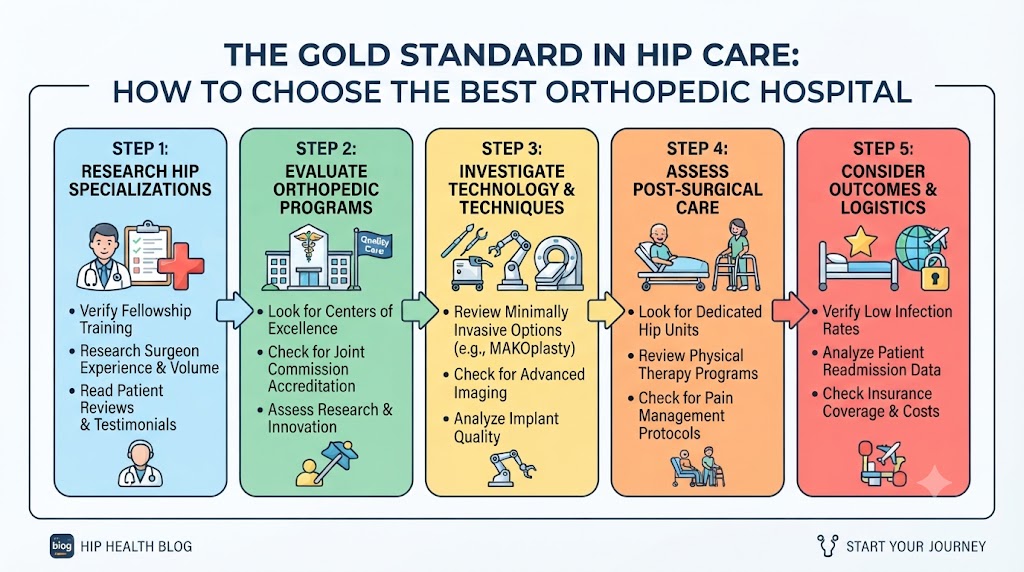
Checklist: How to Find the Best Hip Hospital
- Research hip specialists and verify their surgical experience.
- Compare orthopedic facilities to ensure they meet your comfort and care needs.
- Understand all available treatment options, surgical and non-surgical.
- Review the rehabilitation support provided by the facility.
- Evaluate patient care services, including nursing and international support.
- Consider the long-term recovery planning and follow-up care.
- Make an informed healthcare decision based on facts and specialist consultation.
Future Trends in Hip Healthcare
The field of orthopedics is seeing significant innovation:
- Robotic-Assisted Procedures: Enhancing surgical precision during hip replacement.
- Advanced Implant Technologies: Creating longer-lasting, more biocompatible joint replacements.
- Personalized Planning: Using 3D printing and advanced imaging to customize surgeries to your anatomy.
- Remote Monitoring: Digital tools that allow surgeons to track your recovery progress post-discharge.
Frequently Asked Questions (FAQ)
- What should I look for in the best hip hospital?
Prioritize specialist credentials, a dedicated multidisciplinary team, and comprehensive rehabilitation programs. - How do I choose a hip replacement specialist?
Look for surgeons with fellowship training in joint reconstruction and a high volume of hip procedures. - What makes a hospital specialized in hip care?
A focused department with dedicated orthopedic surgeons, specialized nursing staff, and tailored joint-care protocols. - Which hip conditions require specialist treatment?
Arthritis, fractures, avascular necrosis, and congenital conditions that affect mobility. - Are orthopedic hospitals better for hip surgery?
They often provide more focused expertise and streamlined care paths than general hospitals. - What treatments are available for hip problems?
Treatments range from physical therapy and medication to total hip replacement and fracture repair. - How can international patients find hip hospitals?
Contact international patient services at specialized orthopedic centers for remote consultations. - How important is rehabilitation after hip surgery?
It is crucial for restoring muscle strength, range of motion, and returning to daily activities safely. - What factors affect hip treatment costs?
The severity of the condition, surgical approach, implant type, and post-operative rehab needs. - How can HIPHOSPITALS.COM help patients?
We provide the educational tools to compare hospitals and navigate your hip care journey confidently.
Conclusion
Selecting the right hip hospital is a significant step toward improving your quality of life. By focusing on experienced specialists, advanced facilities, and a supportive rehabilitation environment, you set yourself up for the best possible outcome. While the research process can feel daunting, being informed is your best defense against uncertainty.
We encourage you to use the resources here at HIPHOSPITALS.COM to guide your research, ask the right questions, and approach your treatment journey with clarity. Your joint health is a long-term investment—choose a team that prioritizes your mobility as much as you do.