Introduction
Hip pain can turn everyday activities—like walking, climbing stairs, or even sitting comfortably—into daily challenges. When chronic joint damage limits mobility and reduces your quality of life, finding the right medical facility becomes a vital priority. Choosing Hospitals for Hip Replacement stands out as one of the most critical decisions a patient can make for their long-term health and physical independence.
Selecting the right hospital directly affects surgical success, complication risks, and the overall comfort of your recovery journey. Thorough research ensures you receive safe, high-standard medical care from qualified professionals. Platforms like HIPHOSPITALS.COM serve as trusted hip healthcare guidance platforms, helping patients navigate these complex healthcare choices with clarity and confidence.
Understanding Hip Replacement Surgery
Hip replacement surgery, also known as hip arthroplasty, is a medical procedure in which a surgeon removes damaged or diseased parts of the hip joint and replaces them with artificial implants. The primary goal of this procedure is to relieve chronic pain and restore normal joint function.
Patients commonly require hip replacement due to structural wear and tear or trauma. Common causes leading to hip replacement include:
- Osteoarthritis: The most common form of arthritis, characterized by the breakdown of protective joint cartilage over time.
- Hip Joint Damage: Severe wear from inflammatory joint conditions or abnormal joint development.
- Injuries: Fractures or severe physical trauma resulting from accidents or falls.
- Degenerative Joint Conditions: Conditions that cause progressive deterioration of bone and cartilage tissue.
Why Choosing the Right Hip Replacement Hospital Matters
Deciding where to undergo orthopedic surgery is a deeply personal choice that requires careful thought. Selecting a hospital based solely on convenience or low pricing can lead to surgical complications, improper implant alignment, and prolonged recovery periods.
A well-chosen hospital safeguards patient safety through strict infection control protocols in operating rooms. It guarantees that the attending orthopedic surgeons possess verifiable credentials and extensive procedural experience. Furthermore, high-quality facilities offer robust rehabilitation support, ensuring that patients regain their strength, mobility, and confidence safely.
Key Factors for Choosing Hospitals for Hip Replacement
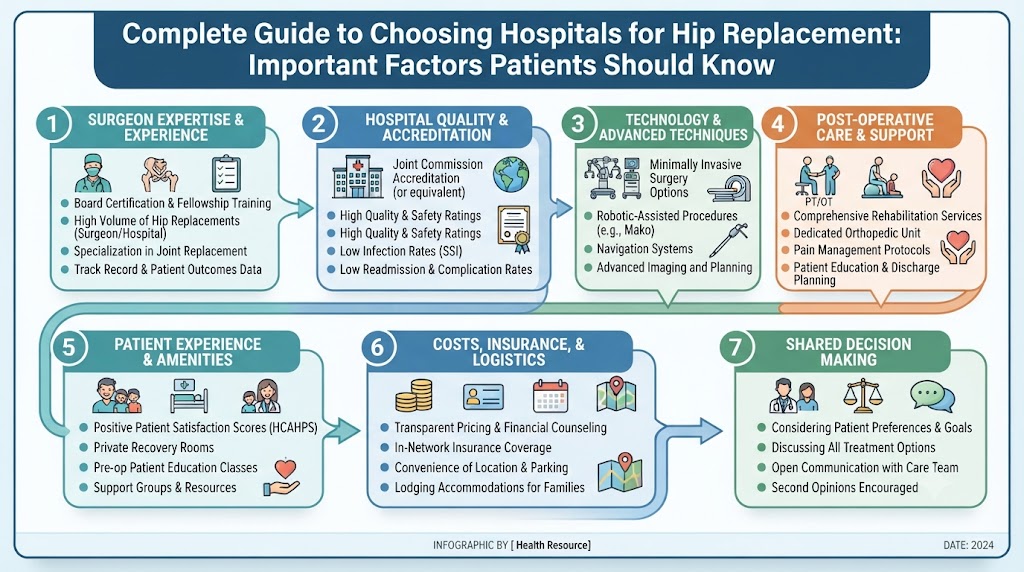
Evaluating specialized orthopedic care facilities requires looking closely at several foundational pillars of medical excellence.
1. Experience of Hip Replacement Surgeons
The quality of a joint care facility depends heavily on the expertise of its surgical team. Patients should look for hospitals featuring board-certified orthopedic surgeons who focus specifically on joint reconstruction and hip preservation.
These specialists possess deep knowledge of complex hip anatomy and stay updated on modern surgical techniques. Knowing that an experienced specialist manages your case provides essential reassurance throughout your treatment journey.
2. Hospital Accreditation and Quality Standards
Hospital accreditation serves as the ultimate benchmark for measuring healthcare quality and patient safety. Independent, internationally recognized organizations evaluate hospitals against strict standards regarding surgical hygiene, anesthesia safety, patient rights, and institutional governance.
Accredited facilities provide immense peace of mind because their operational protocols undergo regular, rigorous audits. Patients should always verify whether a hospital holds recognized global certifications before booking any orthopedic procedure.
3. Advanced Hip Replacement Technology and Facilities
Modern orthopedic procedures demand cutting-edge operating rooms and specialized equipment. High-quality hospitals feature advanced surgical navigation systems, computer-assisted tools, and sterile operating environments designed to minimize surgical risks.
Additionally, a comfortable patient care environment and dedicated orthopedic nursing units ensure that patients receive attentive, specialized care during their hospital stay.
4. Types of Hip Replacement Procedures Available
Every hip condition is unique, meaning treatment must be customized to the individual. Reliable joint replacement hospitals offer a comprehensive spectrum of surgical options, including:
- Total Hip Replacement: Replacing both the acetabulum (socket) and the femoral head (ball) with artificial components.
- Partial Hip Replacement: Replacing only the ball portion of the joint, often used for specific types of hip fractures.
- Revision Hip Replacement: A complex procedure to replace a worn-out or failed previous artificial hip implant.
- Minimally Invasive Hip Procedures: Advanced surgical techniques involving smaller incisions and less muscle disruption to promote faster healing.
5. Implant Options and Surgical Planning
The materials used in hip replacement implants influence the longevity and performance of the joint. Surgeons work closely with patients to select appropriate, biocompatible implant options based on age, lifestyle, and anatomical needs.
Advanced hospitals utilize computerized digital templating for personalized surgical planning, ensuring precise implant sizing and positioning prior to entering the operating room.
6. Rehabilitation and Recovery Support
Surgery is only half the battle; recovery depends heavily on structured physical therapy. Comprehensive orthopedic hospitals feature dedicated physical therapy departments and rehabilitation programs.
Expert physiotherapists guide patients through tailored exercise regimens designed to restore joint flexibility, build core strength, and protect the new hip during the healing phase.
7. Patient Reviews and Hospital Reputation
Real-world feedback shared by previous patients offers invaluable insights into a hospital’s true care standards. Reading authentic reviews, patient testimonials, and institutional reputation reports helps paint a clear picture of nursing responsiveness, pain management quality, and overall patient satisfaction.
Hip Replacement Treatment Process
Understanding the general patient journey helps reduce anxiety and prepares individuals for what to expect:
- Initial Consultation: Meeting with an orthopedic surgeon to discuss symptoms, review medical history, and examine imaging scans.
- Diagnosis and Evaluation: Conducting X-rays or advanced imaging to assess the exact degree of joint damage.
- Treatment Planning: Selecting the appropriate surgical approach, implant type, and recovery timeline.
- Surgery Preparation: Completing pre-anesthesia clearances and medical optimizations.
- Hip Replacement Procedure: Performing the surgical intervention in a sterile, specialized operating theater.
- Recovery and Rehabilitation: Transitioning from post-operative care to guided physical therapy and eventual discharge.
How HIPHOSPITALS Helps Patients Choose Hip Care
Navigating orthopedic healthcare decisions can feel overwhelming given the vast amount of medical information online. HIPHOSPITALS.COM acts as a supportive resource designed to simplify this search.
The platform helps patients explore comprehensive hip replacement treatment options, understand what to look for in best hip replacement hospitals, evaluate qualified hip replacement surgeons, and compare healthcare facilities transparently. By streamlining information access, HIPHOSPITALS.COM empowers patients to approach their joint health with clarity and confidence.
Common Mistakes Patients Make While Choosing Hip Replacement Hospitals
Avoiding common pitfalls ensures a safer and more effective treatment journey. Here are six frequent mistakes to watch out for, along with practical solutions:
- Selecting hospitals only based on price: Choosing the cheapest facility often leads to compromised surgical standards and lower-quality implants.
- Solution: Prioritize clinical expertise, surgeon qualifications, and hospital safety standards first, then evaluate financial aspects.
- Ignoring surgeon experience: Seeing a general surgeon instead of a dedicated joint reconstruction specialist can impact surgical accuracy.
- Solution: Always verify that your operating surgeon specializes specifically in hip replacement procedures.
- Not researching hospital facilities: Committing to a center lacking modern surgical technology or sterile operating environments increases infection risks.
- Solution: Confirm that the hospital maintains accredited operating suites and specialized orthopedic units.
- Overlooking rehabilitation support: Disregarding the importance of post-surgical physical therapy can hinder recovery and restrict joint mobility.
- Solution: Ensure your chosen hospital provides comprehensive in-house or coordinated physical rehabilitation programs.
- Not understanding treatment options: Failing to discuss various surgical approaches, such as minimally invasive options, can limit recovery benefits.
- Solution: Consult with your surgeon about all available techniques suited to your specific anatomical condition.
- Delaying proper orthopedic consultation: Ignoring chronic hip pain or relying solely on temporary medication can worsen joint deterioration.
- Solution: Consult an orthopedic specialist early to obtain an accurate evaluation and prevent permanent joint damage.
Step-by-Step Guide to Selecting a Hip Replacement Hospital
A structured roadmap ensures a smooth and organized healthcare journey:
- Understand your hip condition: Document your pain levels, mobility restrictions, and daily functional limitations.
- Consult experienced orthopedic specialists: Obtain professional clinical evaluations and diagnostic imaging scans.
- Research hospitals and facilities: Identify specialized orthopedic centers renowned for joint reconstruction excellence.
- Compare treatment approaches: Look for institutions offering advanced surgical techniques and personalized care plans.
- Review surgeon expertise: Verify the board certifications, sub-specialty experience, and background of the hospital’s surgical team.
- Understand treatment costs: Request clear, itemized estimates covering consultations, surgical fees, implants, and rehabilitation.
- Plan surgery preparation and recovery: Organize pre-operative checkups, home safety adjustments, and post-discharge physical therapy schedules.
Questions to Ask Before Choosing a Hip Replacement Hospital
Asking targeted questions during your initial consultations ensures total clarity:
- How many hip replacement procedures does the surgeon perform annually?
- Is the hospital officially accredited by recognized healthcare quality bodies?
- What advanced surgical technology or minimally invasive techniques are utilized?
- What type of implants are selected for my specific age and activity level?
- What structured rehabilitation and physical therapy support is provided after surgery?
- How are post-operative follow-up consultations and long-term joint monitoring managed?
- What exact services and medical fees are included in my treatment cost estimate?
Benefits of Choosing the Right Hip Replacement Hospital
Selecting an appropriate orthopedic facility delivers numerous meaningful advantages for patients:
- Better Treatment Planning: Comprehensive evaluations and digital templating ensure precise surgical execution.
- Access to Experienced Specialists: Direct access to world-class orthopedic experts optimizes clinical outcomes.
- Advanced Surgical Facilities: Modern operating environments and stringent infection control protocols ensure greater safety.
- Improved Patient Confidence: Knowing your medical team is highly qualified brings immense mental peace.
- Better Recovery Support: Structured physical rehabilitation facilitates a smoother and faster return to normal activities.
- Complete Joint Care Experience: Coordinated services ensure seamless transitions from pre-surgical education to full post-operative recovery.
Frequently Asked Questions
How do I choose the best hospital for hip replacement surgery?
Patients should evaluate surgeon experience, hospital accreditation, advanced surgical infrastructure, implant quality, rehabilitation support, and verified patient reviews.
What factors should I consider before selecting a hip replacement hospital?
Key factors include orthopedic specialization, operating room hygiene, technology standards, physical therapy services, cost transparency, and hospital reputation.
Why is surgeon experience important for hip replacement?
Experienced surgeons possess advanced technical skill in accurate implant positioning, minimizing soft tissue trauma, and managing complex anatomical variations safely.
What types of hip replacement procedures are available?
Procedures include total hip replacement, partial hip replacement, revision hip replacement, and minimally invasive hip surgeries tailored to individual patient needs.
How long does hip replacement recovery take?
Initial recovery often takes several weeks, during which patients use assistive devices, while full functional recovery and strength building can take a few months with dedicated physical therapy.
What role does rehabilitation play after hip replacement?
Rehabilitation is essential for restoring joint range of motion, strengthening supporting leg muscles, preventing blood clots, and helping patients walk independently again.
Are minimally invasive hip replacement procedures available?
Yes, many specialized orthopedic centers offer minimally invasive approaches designed to reduce muscle disruption and speed up early recovery milestones.
How can HIPHOSPITALS.COM help patients find hip replacement information?
HIPHOSPITALS.COM acts as a reliable guidance platform, helping patients explore hip replacement options, understand hospital selection, and connect with trusted orthopedic resources.
Conclusion
Choosing the right hospital is an important step before undergoing hip replacement surgery. Patients should focus on surgeon expertise, hospital quality, advanced technology, rehabilitation support, and patient care services rather than making choices based on price alone. Proper research helps patients make confident healthcare decisions for their long-term mobility. To explore trusted hip replacement healthcare guidance and information, visit HIPHOSPITALS