Introduction
Dealing with hip pain can change your everyday life. Simple activities like walking, climbing stairs, or even sitting comfortably can become difficult. When hip treatment or surgery becomes necessary, making the right choice can feel overwhelming. Patients and families often focus heavily on the procedure itself, but one of the most important decisions you will make is choosing the right hospital. Hospital quality directly influences your treatment experience, safety, comfort, and long-term recovery. This guide explores why hospital quality matters, what factors define a great hip hospital, and how you can make an informed choice for a healthier future.
Why Hospital Quality Matters in Hip Treatment
When planning for hip care, many people start and stop their search by looking at treatment costs. While cost is important, choosing a hospital based solely on price can lead to hidden risks.
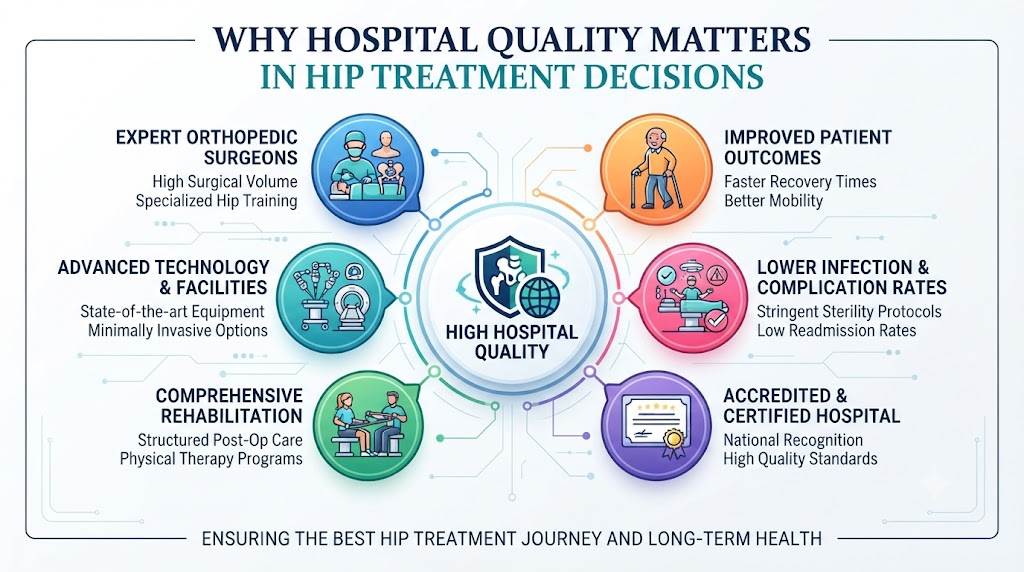
Hospital quality plays a direct role in every stage of your medical journey. A high-quality hospital brings together skilled medical professionals, advanced technology, strict safety standards, and structured recovery programs. When these elements work together, patients experience smoother procedures, fewer complications, and a more confident path back to normal movement.
What Factors Define a High-Quality Hip Hospital?
A reputable orthopedic hospital is built on several key pillars that ensure patients receive safe and effective care.
Experienced Hip Specialists
The skill of your medical team is the heart of any successful treatment. Hospitals that attract and retain experienced orthopedic and hip specialists offer a higher level of care. These experts understand the complex anatomy of the hip joint, have years of experience handling various conditions, and can create customized treatment plans. They also take the time to communicate clearly, listening to your concerns and explaining every step of the process.
Advanced Hip Treatment Facilities
Modern hip care relies heavily on technology and well-equipped infrastructure. High-quality hospitals invest in advanced diagnostic tools, precise surgical equipment, and modern operating theaters. These resources allow doctors to pinpoint the exact source of hip pain, plan procedures with high accuracy, and perform treatments safely.
Specialized Orthopedic Care Team
Hip treatment is rarely a one-person job. A top-tier hospital features a complete multidisciplinary team, including orthopedic surgeons, specialized nurses, physical therapists, and recovery support staff. This close collaboration ensures that every aspect of your care—from pre-surgery preparation to post-surgery rehabilitation—is handled by experts.
Patient Safety and Quality Standards
Safety is a non-negotiable aspect of healthcare. Quality hospitals maintain strict infection control practices, clear emergency protocols, and internationally recognized safety standards. These measures drastically reduce risks and give patients and their families peace of mind.
How Hospital Quality Influences Hip Treatment Decisions
The quality of a hospital shapes your healthcare experience from your very first consultation to your final follow-up visit.
- Better Diagnosis: High-end diagnostic facilities ensure that doctors get a clear, detailed picture of your hip condition, preventing misdiagnoses and ensuring the right treatment path is chosen.
- Personalized Treatment Planning: Quality hospitals avoid a “one-size-fits-all” approach. They evaluate your age, lifestyle, health history, and severity of hip damage to design a plan tailored specifically to you.
- Improved Recovery Support: A hospital’s commitment doesn’t end in the operating room. Structured rehabilitation programs and dedicated physical therapists help you regain strength and mobility safely.
- Patient Confidence: Knowing you are in a trusted facility with a proven track record reduces anxiety, allowing you to focus entirely on healing.
Factors Patients Should Compare Before Choosing a Hip Hospital
Before making a final decision, patients and families should compare hospitals across a few essential areas:
Doctor Experience
Check the credentials, specialization history, and patient feedback of the orthopedic surgeons associated with the hospital.
Hospital Reputation
Look at the hospital’s track record in orthopedic care, overall patient satisfaction rates, and how long they have been successfully treating joint conditions.
Treatment Facilities
Verify whether the hospital offers comprehensive services under one roof, ranging from advanced imaging and surgical suites to dedicated physical therapy centers.
Patient Support Services
Find out if the hospital offers assistance for international travelers, clear billing practices, and dedicated care coordinators to guide you through your stay.
Treatment Cost and Value
Compare overall value rather than just the price tag. A slightly higher investment in a quality hospital often translates to safer procedures, fewer complications, and better long-term results.
Hip Hospital Quality Comparison Table
| Factor | What Patients Should Check | Why It Matters |
| Hip Doctors | Experience, specialization, treatment approach | Helps patients choose skilled specialists |
| Hospital Facilities | Technology, equipment, orthopedic services | Supports safe and effective treatment |
| Safety Standards | Healthcare practices and patient protection | Improves patient safety |
| Recovery Support | Rehabilitation and follow-up care | Helps complete the recovery journey |
Common Mistakes Patients Make While Choosing Hip Hospitals
Navigating healthcare choices can be tricky. Here are a few common pitfalls to avoid:
- Choosing a hospital only because of low cost: Opting for the cheapest option can compromise safety, cleanliness, and the quality of medical implants or care. Solution: Balance cost with quality metrics like doctor expertise and hospital reputation.
- Ignoring doctor experience: Focusing only on the hospital building while overlooking the surgeon’s background can be risky. Solution: Always research the specific specialist who will be performing your treatment.
- Not checking hospital facilities: Assuming all hospitals have the same level of technology. Solution: Confirm that the facility has modern diagnostic and orthopedic equipment.
- Selecting treatment without understanding options: Rushing into a decision without exploring alternative or less invasive treatments. Solution: Ask your doctor for a detailed explanation of all available options.
- Forgetting rehabilitation and recovery support: Overlooking what happens after the procedure is finished. Solution: Ensure the hospital provides a structured physical therapy and follow-up care roadmap.
How to Evaluate a Hip Hospital Before Treatment
Follow this step-by-step checklist to make a confident and informed choice:
Step 1: Understand Your Hip Condition
Learn the basics of your diagnosis. Knowing whether you need lifestyle changes, medication, therapy, or surgery helps you ask the right questions.
Step 2: Research Hip Hospitals
Look up hospitals known for orthopedic excellence. Read about their specialties, success rates, and patient reviews.
Step 3: Review Doctors and Facilities
Examine the credentials of the orthopedic team and ensure the hospital utilizes modern medical technology and clean surgical environments.
Step 4: Understand Treatment and Recovery Plans
Ask about the entire care journey, including the expected hospital stay, pain management protocols, and rehabilitation schedules.
Step 5: Make an Informed Decision
Weigh all factors—safety, quality, expertise, and comfort—to select the hospital that best fits your personal health needs.
Role of Technology in Modern Hip Hospitals
Technology has transformed orthopedic care, making treatments safer and recovery faster. Modern hip hospitals utilize advanced imaging tools to map out joints with extreme precision before procedures begin. Computer-assisted navigation and robotic-assisted surgery help specialists place implants with incredible accuracy. Furthermore, modern monitoring systems track patient vitals closely during and after procedures, ensuring maximum safety and quicker rehabilitation assistance.
How HIPHOSPITALS.COM Helps Patients
Finding reliable information shouldn’t be a challenge. Platforms like HIPHOSPITALS.COM are designed to bridge the gap for patients and families seeking clarity on orthopedic care.
By offering clear guides, hospital comparisons, and straightforward explanations of various hip treatment options, HIPHOSPITALS helps users navigate their choices with confidence. Whether you are researching local options or exploring international care, having access to transparent information makes all the difference in planning your healthcare journey.
Benefits of Choosing a Quality Hip Hospital
- Direct access to highly experienced orthopedic specialists and surgeons.
- Tailored treatment plans designed around your unique health profile.
- Enhanced patient safety through strict infection control and quality standards.
- Utilization of state-of-the-art medical technology and equipment.
- Comprehensive rehabilitation support for a smoother and faster recovery.
- Greater peace of mind and confidence throughout your medical journey.
Frequently Asked Questions (FAQs)
1. Why is hospital quality important in hip treatment?
Answer: Hospital quality ensures that you receive safe, accurate, and effective care. High-quality hospitals provide skilled specialists, advanced technology, and strict safety standards that lower complication risks and improve your overall recovery experience.
2. What factors should patients check before choosing a hip hospital?
Answer: Patients should look at doctor expertise, hospital reputation, safety protocols, available medical technology, cleanliness, and the quality of post-treatment rehabilitation support.
3. Why is hip doctor experience important?
Answer: Experienced hip specialists have handled a wide variety of joint conditions. Their expertise allows them to diagnose accurately, handle complex situations smoothly, and perform treatments with high precision.
4. How do advanced facilities help hip patients?
Answer: Advanced facilities provide accurate diagnostic imaging, safer surgical environments, and modern recovery tools. These resources support precise treatment planning and help patients heal more comfortably.
5. Should patients choose a hip hospital only based on cost?
Answer: No. Choosing a hospital solely based on the lowest price can compromise your safety and the quality of care. It is always best to balance cost with hospital reputation, doctor expertise, and safety standards.
6. Why is rehabilitation support important after hip treatment?
Answer: Rehabilitation is essential for rebuilding muscle strength, improving flexibility, and teaching you how to move safely. Good physical therapy ensures you achieve the best possible long-term mobility.
7. How can patients compare different hip hospitals?
Answer: Patients can compare hospitals by researching doctor credentials, reading patient reviews, checking accreditation standards, evaluating available technology, and consulting healthcare information platforms like HIPHOSPITALS.COM.
8. Why does hospital selection affect hip treatment decisions?
Answer: The hospital you choose dictates the quality of your medical team, the safety of your environment, the accuracy of your diagnosis, and the standard of your recovery support, directly shaping your overall treatment outcome.
Final Thoughts
Choosing the right hip hospital is one of the most important healthcare decisions you will make. It goes far beyond finding a place to undergo a procedure—it is about finding a trusted environment where your safety, comfort, and long-term mobility are the top priorities.
By considering hospital quality, doctor expertise, advanced facilities, and proper recovery support, you can take control of your health journey. Platforms like HIPHOSPITALS are here to help you navigate these choices, providing clear and reliable information so you can move forward with confidence toward an active, pain-free life.