Introduction
When you or someone in your family has hip pain, stiffness, or trouble walking, finding answers is very important. Many people look on the internet for health information. You might type questions into a search engine to find out what your body is telling you, look up common hip problems, compare different hospitals, find a good doctor, or look at treatment choices. You might also check how long recovery takes, how much care costs, and what to know if you want to travel for treatment.
However, when you search online, you will find many different opinions and ideas. Not all health information is good or true. Some websites give clear, helpful facts from real medicine, while others give confusing details, false claims, or bad descriptions of surgery.
Because of this, researching hip care can feel hard. Patients need clear and honest facts before making health choices. Understanding your health issue helps you feel less worried and lets you talk better with your doctors. At the same time, you still need real medical advice from a trained doctor. Reading online only helps you learn and plan; it does not replace a doctor’s checkup. Websites like HIPHOSPITALS.COM help patients look at hip hospitals, doctors, and treatments in an easy way.
What Does Good Hip Care Information Mean?
When looking at health tips online, it helps to know what safe and good hip care information looks like. Trusted information gives true, clear, and fresh facts about health issues, treatments, hospitals, and doctors. It comes from safe sources and is checked by people who know medicine well.
Good hip care information usually has:
- True facts about common hip issues and what causes them.
- Clear talks on both non-surgery and surgery choices.
- Honest details on what happens in the hospital and during healing.
- Real facts about possible risks.
- Simple rules on how to check hip hospitals and doctors.
- Helpful tips on treatment costs and aftercare.
Patients should always be careful when reading things online. The internet has a lot of content, and not all of it is checked by medical experts. Some articles are old or only made to sell things. Learning to spot good sources keeps you safe from bad advice.
Why Patients Look for Hip Care Information
Hip problems can change your normal day. They can make it hard to put on shoes, stand up, or take a walk outside. People look for health information for many reasons.
Common reasons include:
- Hip pain that will not go away with rest.
- Trouble walking, standing up, or going up stairs.
- A stiff hip joint in the morning or after sitting down for a long time.
- Hip injuries from falls or accidents.
- Joint wear and tear over time.
- Hip problems that come with age, like worn-out joints.
- Sports injuries in active people.
- Questions and worries about hip replacement surgery.
- Looking for a good hip doctor or bone surgeon.
- Searching for a clean hip hospital near home or far away.
- Thinking about getting a second opinion from another doctor.
- Comparing different ways to feel better before choosing a plan.
Remember that hip pain can come from many different things. Pain in your hip does not always mean you need an operation, and it does not point to just one problem. Only a real doctor or bone expert can find the exact cause of your pain.
Why Good Information Matters Before Getting Treatment
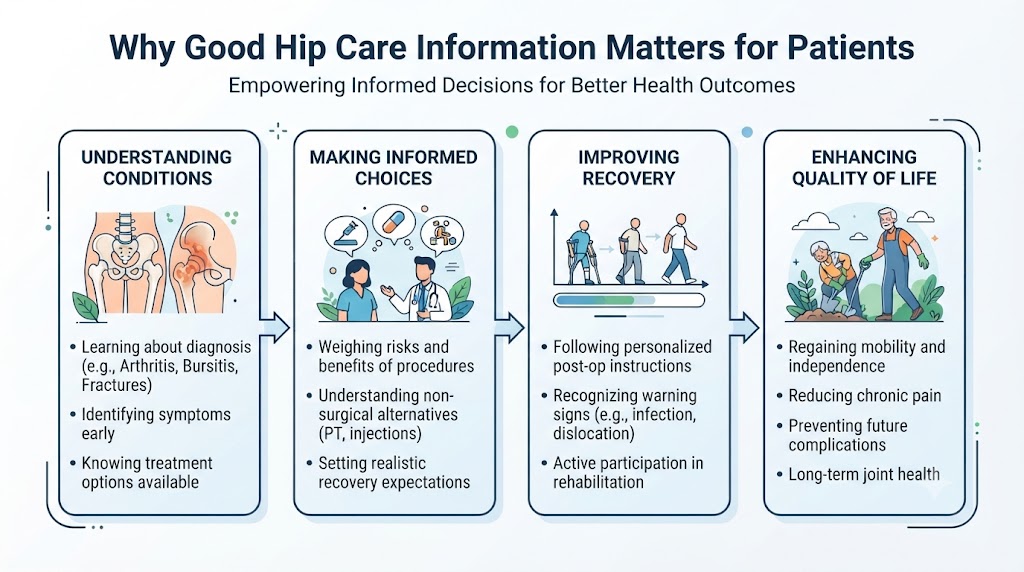
Choosing to get treatment for your hip is a big step. Before you decide anything, it helps to understand your health issue and all your choices. Good information acts as a base to help you feel safe.
When you take time to learn, you can understand:
- Your exact hip condition and how it might change.
- All treatment choices, from easy lifestyle changes to big surgeries.
- Non-surgery care, such as physical therapy, medicine, changes in daily habits, and shots.
- Surgery choices, including small cuts or full operations.
- What hip replacement means, including partial and total swaps.
- Good points, limits, and risks of each choice.
- What healing looks like, including time frames and exercise needs.
- What kind of help you need after treatment ends.
- Good questions to ask your doctor.
You should always make treatment choices with a trained doctor who knows your health history. Reading helps you ask good questions, but your doctor gives the final plan.
How Bad Information Can Trick Patients
Trusting bad or false online sources can lead to confusion and poor choices. When health tips are fake or written only to sell products, they can make you expect too much or feel scared for no reason.
Common problems from bad information include:
- Misreading your symptoms and guessing the wrong health issue.
- Thinking surgery is the only fix, ignoring easy non-surgery options.
- Believing fake treatment claims or miracle cures.
- Trusting false healing promises that say you can run right after surgery.
- Picking a hospital just because it shows up first on an ad site.
- Ignoring the real training and experience of the doctors.
- Picking a hospital just because it is the cheapest, missing safety checks.
- Misunderstanding healing time, leading to early pain or injury.
- Waiting too long to see a doctor because a bad article said the pain would stop.
Patients can stop this by being careful with online search results. Always look at multiple health sites and ask real bone doctors if the facts are true.
What Patients Should Check in Hip Care Information
When reading about hips, break your search into small parts. This helps you get useful facts instead of getting lost in hard words.
Hip Health Facts
Learn how the hip is built and what problems can hurt it. Understand how joint wear, swelling, or injury causes pain. Always trust safe sources and your medical team to explain your diagnosis.
Treatment Choices
Know that treatment is not the same for everyone. Good facts show a path starting with easy rest and exercise, moving to medicine, and ending with surgery if needed.
Hip Doctor Information
Look at the training, work history, and hospital links of medical experts. Knowing if a doctor focuses on saving joints or doing joint swaps helps you pick the right person.
Hip Hospital Information
Compare hospitals by looking at their bone care setup, testing tools, operating rooms, and nursing teams. Check if they have good physical therapy rooms and help for people traveling from afar.
Healing Information
Know that healing changes based on your health, age, and chosen treatment. Good guides show real steps, not magic overnight fixes.
Cost Facts
Looking at costs helps you plan your money. Keep in mind that costs change based on the treatment, hospital, place, and patient needs. Know what is included, like doctor fees, hospital rooms, and therapy.
How Patients Can Check if Health Facts Are True
Checking health facts is easy if you follow a few basic steps:
- Check who wrote it: Look for articles written by health experts or trusted medical groups.
- Look for real medical sources: See if the page uses safe medical rules or expert studies.
- Compare safe sources: Read more than one good website to see if the facts match.
- Check the date: Make sure the article is fresh and up to date.
- Doubt magic claims: Do not trust any page that promises a 100% fix with no risk.
- Research hospitals: Check hospital safety ratings and rules from official groups.
- Review doctor details: Look at a doctor’s license and work history before booking a visit.
- Write down questions: Bring your notes to talk about with your doctor.
- Talk to a professional: Never use online text instead of a real doctor visit.
Why Hip Doctor Details Matter
When dealing with a hip joint, the skill of your doctor matters a lot. Researching a doctor means looking past ads to see their true background.
Patients often look at:
- Medical School and License: Check that the doctor has valid degrees and a clean license.
- Special Training: Look for surgeons who focus on hips or joints rather than general doctors.
- Experience: Ask how often the doctor does your specific surgery.
- Hospital Links: Check which safe hospitals the doctor works in.
- Listening Skills: Notice if the doctor takes time to listen and answer your questions.
- Clear Talk: A good doctor talks about all choices, including non-surgery care.
- Follow-up Care: See how the doctor helps you heal after your treatment.
Finding the right doctor helps build trust and gets you care made just for you.
Why Hip Hospital Details Matter
The hospital you pick gives you the space, tools, and help you need to heal. Checking hospitals well keeps you safe and comfortable.
Key things to look at:
- Bone Care Units: Look for units with good tools for scanning and surgery.
- Special Surgery Services: Check if they do modern, small-cut surgeries.
- Help After Surgery: Find out if they have good physical therapists and nurses.
- Cleanliness: Look at safety rules and room comfort.
- Help for Travelers: If you travel far, check if they help with translators and travel steps.
- Safety Ratings: Look for official stamps of safety and quality.
- Location: Think about how easy it is to go back for checkups.
Always check important facts with the hospital office before booking anything.
How HIPHOSPITALS.COM Helps Patients Research
Finding health facts can feel like too much work. HIPHOSPITALS.COM helps make this easier for patients and families. The site is a helpful place where you can find safe facts about hip care, hospitals, doctors, and travel choices in one spot.
The platform helps patients with:
- Finding Hospitals: Helping users look at different care centers and compare them.
- Checking Care Choices: Giving clear facts on surgery and non-surgery ways to fix hip pain.
- Learning About Doctors: Guiding users on what to look for in a bone surgeon.
- Exploring Places: Giving tips on popular medical travel spots for care far from home.
- Making Question Lists: Helping patients write down good questions for their doctor.
- Travel Steps: Breaking down travel plans and papers for international patients.
HIPHOSPITALS.COM helps you learn. It does not replace real doctors or hospitals. It is a safe starting point to help you ask better questions and take charge of your health.
Hip Care and Medical Travel
Many patients travel to other cities or countries to find special care, modern tools, or lower costs. This can be great, but it takes careful planning.
If you want to travel abroad for care, check:
- Hospital Quality: Make sure the foreign hospital meets global safety rules.
- Doctor Experience: Check the training and background of your surgeon.
- Treatment Options: Ensure the clinic offers the exact surgery you need.
- Medical Records: Gather old scans, X-rays, and notes to share with your new team.
- Total Costs: Know the exact price, including rooms, doctor fees, and extra costs.
- Travel Plans: Plan flights and local rides early.
- Place to Stay: Make sure you have a safe, comfy place to rest near the hospital before flying home.
- Language Support: Check if translators or English speakers are there to help.
- Checkups at Home: Plan how you will get physical therapy when you return.
- Insurance and Visas: Check your health insurance and travel papers.
Online tools help you plan, but they do not replace a talk with your real medical team.
Why Cost Facts Should Be Clear
Knowing the price of care is key to planning. Costs can change a lot, and clear facts stop money worries.
Costs vary depending on the treatment, hospital, location, and individual patient requirements.
When looking at prices, ask what is included. Common cost parts are:
- First visits and testing (like scans and blood work).
- Surgeon and helper fees.
- Operating room and medicine costs.
- Cost of the new hip part or medical device.
- Hospital room and nurse care.
- Medicines after surgery.
- Physical therapy sessions.
- Local travel, food, and hotel stays if you are away from home.
Never trust vague price tags or huge discounts. Always ask for a clear list of prices from the hospital before you say yes.
Why Questions and Second Opinions Matter
Taking part in your health is smart. Asking questions and getting a second opinion helps you feel sure about your care plan.
Good questions to ask doctors:
- What is causing my hip pain?
- What tests do I need to be sure?
- What treatment choices do I have?
- Do I need surgery, or can we try other things first?
- What are the risks and good points of this plan?
- How long will healing take?
- What kind of help do I need after surgery?
- What will the total cost be?
- How can I get my home ready for my return?
If a doctor tells you to have big surgery, getting a second opinion from another expert is normal and smart. It gives you peace of mind.
Getting Ready for a Doctor Visit
Going to a doctor with clear notes makes the visit fast and useful.
Bring a folder with:
- Old medical notes and letters.
- Recent X-rays and scans.
- Lab test papers.
- A list of all your medicines and allergies.
- Notes on past injuries or surgeries.
- A written list of your pain symptoms.
- Your list of questions.
- Insurance or travel papers if needed.
Organized papers help your doctor help you faster.
Common Mistakes to Avoid
When looking at hip care, try to avoid these common traps:
- Trusting every site: Thinking all online text is true.
- Picking by rank alone: Choosing a hospital just because it popped up first online.
- Believing fake cures: Trusting ads that promise zero risk or instant fixes.
- Expecting fast healing: Thinking you can run days after a major hip operation.
- Ignoring doctor training: Failing to check if your surgeon is truly skilled.
- Choosing only by price: Picking the cheapest clinic and ignoring safety.
- Thinking surgery is always next: Believing hip pain always ends in an operation.
- Skipping rehab: Not doing physical therapy after treatment.
- Waiting too long: Putting off a doctor visit because of bad web advice.
- Not asking questions: Saying yes to a plan without understanding it.
How Digital Tools Are Changing Hip Care
Technology has changed how we look for health facts and talk to doctors.
Digital changes include:
- Virtual Hospital Tours: Looking at hospital rooms and tools online before you travel.
- Digital Records: Keeping X-rays and notes in safe files to share with doctors.
- Video Chats: Talking to doctors online to save travel time.
- Online Checkups: Keeping in touch with your medical team during healing.
- Doctor Search Sites: Finding trained bone doctors easily.
- Travel Help Online: Booking trips and care plans through safe portals.
These tools make healthcare easier to reach and understand.
Frequently Asked Questions
Why is trusted hip care information important for patients?
Trusted information helps patients understand symptoms, look at care choices, and talk well with real doctors. It stops worry and keeps you safe from false web claims.
How can patients tell if hip care information is reliable?
Good information comes from real experts, uses safe medical guidelines, gives balanced views, and does not make fake promises.
What should patients research before choosing a hip hospital?
Patients should check hospital care units, surgical tools, clean conditions, safety ratings, doctor availability, and therapy support.
Why is it important to check a hip specialist’s experience?
An experienced doctor knows how to treat hard joint issues, giving patients safe and correct care.
Can online hip care information replace a doctor’s consultation?
No. Online facts are for learning only. They cannot replace a real physical exam and talk with a trained doctor.
What information should I prepare before a hip specialist consultation?
Bring old medical reports, scans, a medicine list, a note of your symptoms, insurance details, and your written questions.
Why should patients understand their hip treatment options?
Knowing all choices—like physical therapy or surgery—helps patients work with their doctors to pick the best path.
How important is cost information when choosing hip treatment?
Cost details help you plan your money. Because prices change based on your needs, a clear price list stops money stress.
Why does follow-up care matter after hip treatment?
Follow-up care and physical therapy help fix your joint movement and stop problems so you heal well.
How can HIPHOSPITALS.COM help patients research hip care options?
HIPHOSPITALS.COM helps users find hip hospitals, check doctor skills, look at treatment choices, and plan medical travel easily.
Conclusion
Finding safe facts when you have hip pain can feel tough, but good info makes a big difference. Reading about health conditions, hospitals, and doctors helps patients and families make smart choices. Always remember that web articles are meant to teach you, not replace a real doctor. Talk over your treatment plan with a trained expert. Looking at costs and healing steps helps you get ready. Sites like HIPHOSPITALS.COM are built to help patients look at hip care, find doctors, and plan medical travel in a clear way. Take your time, ask good questions, and work with trusted doctors to get the care you need.