Introduction
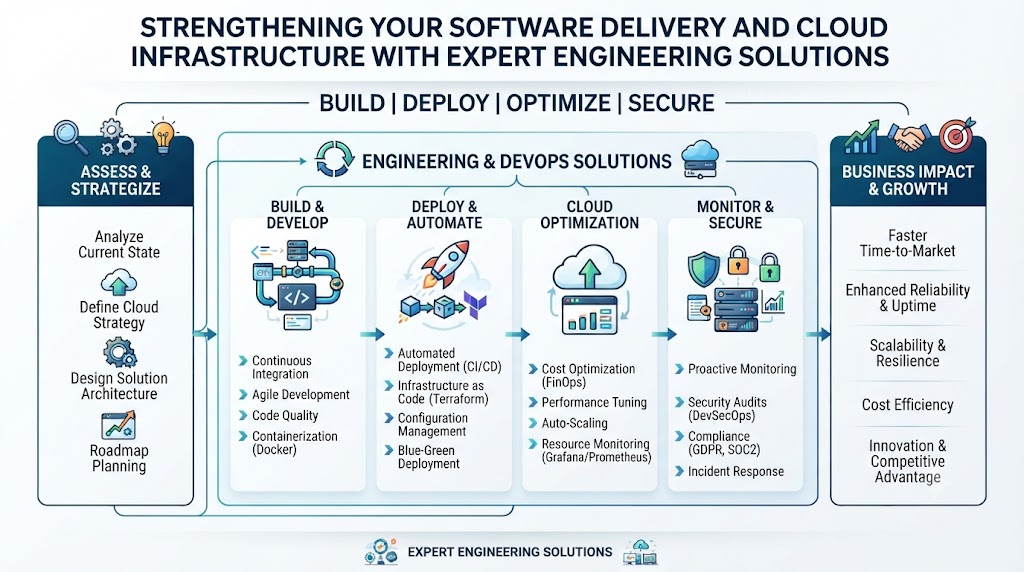
Many growing businesses run into roadblocks when trying to release software updates quickly or manage unpredictable server environments. Keeping digital platforms safe, steady, and fast takes a specific set of skills that many everyday teams simply do not have the time to master. Organizations frequently search for dependable partners to handle heavy automation, streamline deployments, and smooth out cloud operations. This is where Cotocus steps in to provide practical, hands-on support for these technical hurdles. This guide looks at the essential cloud, security, and DevOps services organizations use to build stronger digital systems from the ground up.
Why Businesses Need DevOps Consulting Services
When developers write code in one corner and operations teams manage servers in another, communication often breaks down and software updates stall. DevOps Consulting Services help fix this divide by bringing both groups together into a shared, collaborative workflow. This method focuses on eliminating tedious manual chores, speeding up release pipelines, and setting up reliable infrastructure management. By introducing structured automation, teams gain clear oversight into how applications behave in real time. Every company needs a tailored DevOps strategy that fits its unique applications, team size, and business targets.
How Managed DevOps Services Support Modern Engineering Teams
Even when a company understands the value of continuous deployment, its internal staff may lack the hours needed to monitor servers and maintain automation scripts. Managed DevOps Services offer ongoing technical assistance to keep infrastructure running smoothly behind the scenes. This support handles daily deployment workflows, active system monitoring, and infrastructure upkeep. Handing these tasks over to external experts frees up internal software engineers to focus on writing code and building new product features. Organizations can tailor this support model to match their specific workloads and internal bandwidth.
Understanding the Role of Cloud Consulting Services
Transitioning to cloud environments or expanding an existing setup involves tricky choices regarding cost control, architecture design, and system performance. Cloud Consulting Services guide organizations through these choices by evaluating technical needs and mapping out practical infrastructure blueprints. Consultants work closely with teams to review system workloads, plan out scalable frameworks, and set baseline security rules. Proper planning helps companies dodge costly mistakes like over-provisioning servers or building brittle cloud architectures. Clear evaluations ensure that moving to the cloud actually supports wider business goals.
How Cloud Migration Services Help Businesses Move to the Cloud
Tying all your applications to physical, on-site hardware can bottleneck growth and drive up maintenance costs year after year. Cloud Migration Services assist organizations in shifting their databases, software, and workloads safely over to modern cloud platforms. A clean migration requires careful mapping of system dependencies, rigorous trial testing, and structured post-move oversight to prevent unexpected downtime. Shifting workloads properly gives companies the freedom to scale computer power up or down depending on real user demand. Success heavily depends on thorough preparation and precise execution.
Kubernetes Consulting Services for Containerized Applications
As companies shift toward modern cloud architectures, they often package software into neat containers to make them easier to run across different servers. However, keeping track of dozens or hundreds of running containers can quickly become an operational headache. Kubernetes Consulting Services help businesses configure container orchestration platforms to automate application scaling and deployment. While these tools ensure software runs reliably across clusters, they also add technical complexity that requires specialized guidance. Companies should evaluate whether container management truly fits their current operational scale.
Why DevSecOps Consulting Services Matter for Software Security
Security is often treated as a final checklist item right before a software launch, which frequently leads to costly fixes and exposed vulnerabilities. DevSecOps Consulting Services weave security checks and protective habits directly into the development lifecycle from day one. This means encouraging clean coding standards, automating security scans inside delivery pipelines, and locking down infrastructure configurations early. Integrating safety measures into daily work helps teams catch weak spots before code hits production. A balanced security mindset protects digital assets without slowing down developer velocity.
How SRE Consulting Services Support System Reliability
As applications scale up and user traffic spikes, keeping software running without interruption becomes a top operational priority. SRE Consulting Services help companies apply Site Reliability Engineering principles to enhance system monitoring, observability, and incident response. This involves setting realistic availability targets, creating smart alert systems, and running post-incident reviews to prevent repeating errors. Structured reliability routines help engineering teams spot performance dips early and maintain steady user experiences. Reliability goals should always mirror the actual needs of the software and its users.
Platform Engineering Consulting Services for Better Developer Experience
Development squads often lose valuable time fighting messy toolchains, mismatched testing environments, and manual infrastructure requests. Platform Engineering Consulting Services assist organizations in building internal developer portals that standardize tools and provide clean access to infrastructure. By introducing self-service options and reusable components, platform teams streamline daily software production. This boosts overall output and lets developers focus on building features rather than wrestling with server configurations. Internal platforms should be built around the real daily habits of the engineering staff.
When Businesses Consider DevOps Outsourcing Services
Growing companies frequently reach a phase where their infrastructure needs outgrow the size or specialized skill set of their internal team. DevOps Outsourcing Services offer direct access to external engineering talent and operational muscle without the friction of immediate hiring. Organizations typically look to outsourcing partners when they need specialized knowledge in automation, cloud migrations, or deep system architecture. This flexible model lets businesses scale their technical support up or down based on shifting project demands and budgets.
Why Corporate DevOps Training Is Important for Teams
Even the most advanced automation tools will fail if the people using them do not understand how they work under the hood. Corporate DevOps Training helps organizations upskill their engineering, IT, and development staff on modern software workflows and cloud concepts. Structured learning programs bridge internal knowledge gaps and build a unified understanding of best practices across the entire team. Training empowers employees to troubleshoot problems independently and manage infrastructure with confidence. Consistent upskilling keeps technical squads aligned with industry standards.
| Service | Main Focus | How It Can Help |
| DevOps Consulting | Improving development and operations processes | Helps organizations understand suitable DevOps practices |
| Managed DevOps | Ongoing DevOps support | Supports infrastructure, automation, and operations |
| Cloud Consulting | Cloud planning and architecture | Helps businesses evaluate cloud requirements |
| Cloud Migration | Moving workloads and applications | Supports migration planning and implementation |
| Kubernetes Consulting | Managing containerized applications | Helps teams understand Kubernetes environments |
| DevSecOps Consulting | Integrating security into workflows | Supports security practices across development and operations |
| SRE Consulting | System reliability and operations | Helps improve monitoring and reliability practices |
| Platform Engineering | Internal engineering platforms | Supports standardized tools and developer workflows |
| DevOps Outsourcing | External DevOps expertise | Provides additional technical support |
| Corporate DevOps Training | Team learning and skills | Helps teams understand modern DevOps practices |
How to Choose the Right DevOps and Cloud Services Partner
Picking a technology consultant or DevOps partner is a major decision that influences long-term operational efficiency. Companies should start by auditing their current workflow bottlenecks, infrastructure goals, and internal skill gaps. When reviewing potential partners, look closely at their hands-on experience with cloud automation, security practices, and container tools. A trustworthy partner will listen carefully to your specific operational needs rather than forcing a rigid template. It is also wise to check their communication habits, long-term support style, and cultural fit to ensure smooth collaboration.
How Cotocus Brings DevOps and Engineering Services Together
Cotocus offers a well-rounded suite of technology services tailored to assist businesses working with modern software development, automation, and cloud infrastructure. Through core offerings like DevOps Consulting Services, Managed DevOps Services, and Cloud Consulting Services, Cotocus helps organizations build cleaner, more efficient operational pipelines. Companies undergoing infrastructure shifts can lean on Cloud Migration Services or Kubernetes Consulting Services, while those looking to shore up safety and stability can utilize DevSecOps Consulting Services and SRE Consulting Services. Furthermore, teams can improve developer workflows with Platform Engineering Consulting Services, scale capacity through DevOps Outsourcing Services, or upskill staff via Corporate DevOps Training. This wide array of solutions gives companies the right technical backup at every phase of their growth.
Common DevOps and Cloud Challenges Businesses Should Avoid
- Depending on manual release processes that invite human mistakes and delay launches.
- Suffering from communication silos between software writers and infrastructure operators.
- Launching cloud migration projects without proper architecture planning or dependency checks.
- Neglecting to set up proper system monitoring and observability tools.
- Treating security as an afterthought rather than weaving it into everyday tasks.
- Adopting complex tools like Kubernetes without evaluating real operational capacity.
- Ignoring system reliability until a major outage affects customers.
- Failing to document internal infrastructure steps and deployment guides clearly.
- Pushing automation scripts into production without sufficient testing.
- Forgetting to invest in ongoing team training as technology stacks change.
- Setting unrealistic uptime goals that do not align with real business needs.
- Chasing tech trends based on hype instead of actual operational value.
Simple Tips for Better DevOps and Cloud Operations
- Schedule regular check-ins to review your current software delivery and server workflows.
- Prioritize automating repetitive, mundane chores to free up staff time.
- Foster open communication channels between developers, IT staff, and security teams.
- Keep clear, up-to-date documentation for all infrastructure setups and release steps.
- Install solid monitoring tools to catch performance drops before users notice.
- Revisit security practices continuously across the entire software development lifecycle.
- Plan cloud changes in small, incremental steps to minimize operational risks.
- Choose tools that match your current team size and technical maturity.
- Invest in steady education to keep your engineers’ skill sets sharp.
- Aim for gradual, consistent process improvements rather than trying to fix everything overnight.
Frequently Asked Questions — Primary FAQs
What are DevOps Consulting Services?
These services assist organizations in bridging the gap between development and operations teams to streamline release cycles and automation.
How do Managed DevOps Services function?
They supply continuous external support for server infrastructure, deployment pipelines, CI/CD workflows, and routine system health checks.
What is the goal of Cloud Consulting Services?
They help businesses assess cloud infrastructure choices, design scalable architectures, and map out secure operational guidelines.
What happens during Cloud Migration Services?
Organizations receive professional guidance to move their databases, applications, and workloads securely from physical hardware to the cloud.
When are Kubernetes Consulting Services helpful?
They prove useful when businesses need expert help configuring containerized applications and managing orchestration platforms.
What do DevSecOps Consulting Services cover?
They concentrate on embedding security checks and safe coding practices directly into daily software development and deployment flows.
How do SRE Consulting Services help platforms?
They guide companies in setting up structured monitoring, observability practices, and incident response frameworks to protect system reliability.
What are Platform Engineering Consulting Services?
These services help businesses build internal developer portals that standardize tools, infrastructure access, and workflow routines.
Why would a company choose DevOps Outsourcing Services?
Outsourcing offers flexible access to external engineering talent when internal teams lack specialized knowledge or bandwidth.
How does Corporate DevOps Training benefit a business?
It upskills internal workers on modern automation, cloud tools, and software delivery practices to build team independence.
What does Cotocus focus on?
Cotocus provides modern software development, DevOps consulting, cloud migration, security, reliability, and technical training services.
Are these engineering services good for fast-growing startups?
Yes, startups rely on these services to establish scalable infrastructure and efficient deployment workflows from day one.
Frequently Asked Questions — Related FAQs
How can a business begin adopting DevOps habits?
A company can start by spotting manual bottlenecks in its release pipeline and introducing basic automation and cross-team communication.
What should companies check before moving to the cloud?
Businesses should evaluate application dependencies, data protection requirements, architecture compatibility, and ongoing operational expenses.
Is Kubernetes required for every cloud application?
No, Kubernetes is only necessary if software runs across complex container clusters that demand heavy orchestration.
Why is automation vital in modern software engineering?
Automation cuts down repetitive manual work, reduces human errors, and lets teams push software updates out much faster.
How can companies speed up software delivery safely?
By deploying automated testing routines, continuous integration pipelines, and gradual rollout strategies to catch bugs early.
What elements drive the reliability of a software system?
Solid architecture, clear monitoring, thoughtful incident response planning, and proactive infrastructure upkeep heavily influence reliability.
How does DevSecOps differ from traditional security checks?
DevSecOps embeds security validations across every single stage of development rather than testing software only at the final finish line.
How can organizations pick the right technology training course?
Organizations should pick training programs that match their existing tech stack and specifically target internal team skill gaps.
Final Thoughts
Building and scaling modern software platforms demands a careful mix of organized workflows, dependable cloud infrastructure, and continuous automation. Whether a company is planning a cloud transition, tightening security measures, or boosting developer productivity, having a sound operational strategy makes all the difference. By collaborating with experienced professionals like Cotocus, businesses can streamline technical operations, safeguard system reliability, and empower their workforce for long-term success. Embracing these core engineering practices ensures your digital products stay secure, efficient, and fully prepared for whatever comes next.