
Introduction
Finding the right mobile network code can feel tricky when you work with global telecom data. Developers, roaming teams, and network researchers often struggle to identify the exact carrier behind a network code. Mobile network codes help organize how phones connect to cell towers in different countries. When you need to research carrier details or verify network records, clear data makes your job much easier. This guide explains how MCC, MNC, and PLMN information works, how to use a mobile network operator directory, and how tools like eSIMGlobo help you explore telecom data clearly.
Understanding MCC and MNC Codes
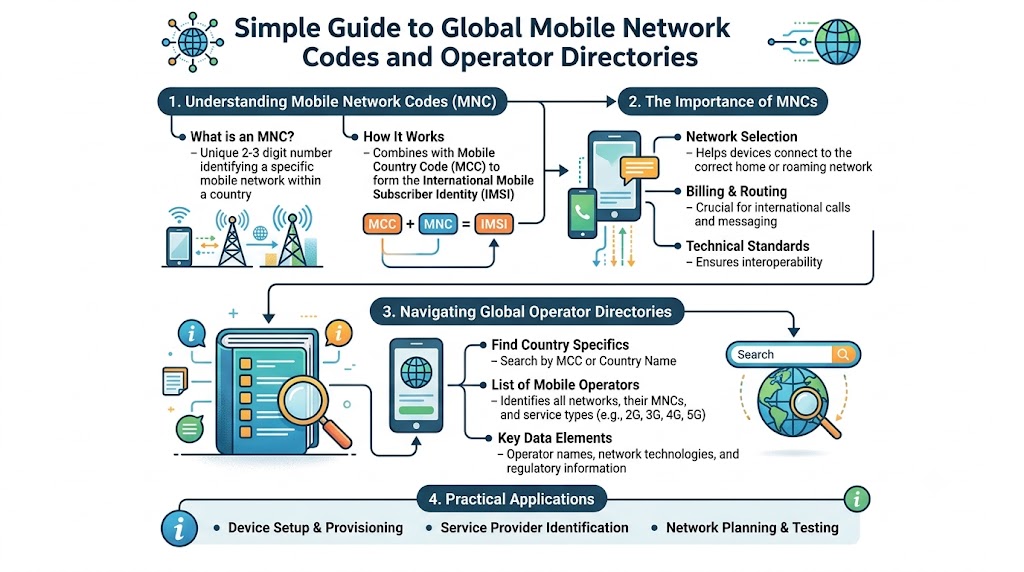
Mobile network identifiers use standard code numbers to route phone traffic and spot cellular systems. Every phone uses these numbers to find its home network and connect to foreign cell towers when traveling.
MCC stands for Mobile Country Code. It is a simple three-digit number that marks a specific country or geographic area. For example, the MCC for the United Kingdom is 234 or 235.
MNC stands for Mobile Network Code. It is a short two- or three-digit number that comes right after the country code. Together, the MCC and MNC form a unique pair that points to a specific mobile network operator. For instance, combining a country code with a specific network code points directly to a known network assignee in official records.
PLMN Code Lookup and Its Purpose
A PLMN code combines the MCC and MNC into a single number string known as a Public Land Mobile Network identifier. Telecom engineers use a PLMN code lookup when they need to check which network a SIM card is trying to join.
This lookup process helps roaming teams understand partner network routing and carrier connections. However, a code alone does not confirm active service or signal coverage. A company might hold an official network code assignment without owning active cell towers or selling plans to consumers. Always check supporting records to confirm whether a code represents an active commercial network or a test system.
Finding Mobile Network Codes by Country
Researching mobile networks usually starts with a specific location on the map. A mobile network codes by country list organizes network numbers so researchers can find every assigned operator in a given nation.
Using country-based lists helps you narrow down large sets of data quickly. If you build mobile apps or test roaming connections in France, for example, you can filter records by that country code to view all authorized network holders. This simple approach saves time and keeps your research organized.
Using a Mobile Network Operator Directory
A mobile network operator directory gives users an easy way to explore operator names, network codes, and registration records. Instead of reading through complex government files, researchers can search an organized database for carrier names or numerical codes.
This type of directory is helpful for mobile app teams and telecom researchers. Developers use operator directories to check carrier details when building apps that need network identification. Roaming teams use these directories to map out international partner networks and check carrier identities before launching new services.
Exploring a Global Telecom Provider Directory
Global telecom research requires data that crosses borders and connects many types of network assignments. A global telecom provider directory brings together network codes from hundreds of countries into one searchable resource.
Platforms like eSIMGlobo provide independent directories built on official international network-code assignment data. These directories let users explore thousands of network-assignee records, shared-code assignments, and regional operators without sorting through scattered government databases. Having a single directory makes cross-border research much faster.
Understanding a Telecom Operator Database
A solid telecom operator database contains structured records about network codes, company names, official assignees, and operational types. The value of this data depends heavily on official sources and careful verification.
Reliable databases rely on official ITU E.212 network-code assignments rather than unverified user guesses. It is important to separate current information from old or test records. An outdated database might list a company that no longer holds a network code or has changed its name. Regular source checks keep your telecom records accurate.
Exploring an MVNO Directory
A Mobile Virtual Network Operator, or MVNO, is a mobile company that does not own physical cell towers. Instead, an MVNO rents network space from a traditional Mobile Network Operator.
Because many MVNOs run on a host operator’s network, they do not always hold their own independent MCC or MNC assignment. An MVNO directory helps researchers track these virtual operators and see their link to host networks. This clarity prevents confusion when looking at carrier footprints and market options.
Finding Providers Through an eSIM Provider Directory
An eSIM provider directory focuses on companies that sell digital SIM plans for travel and remote connectivity. These directories help consumers and businesses compare digital travel options.
It is important to see the differences between network operators, MVNOs, and companies selling eSIM plans. A traditional network operator owns physical cell towers. An MVNO sells plans using someone else’s towers. Meanwhile, an eSIM provider might be a digital shop that sells plans built from multiple carrier partners. An eSIM provider directory makes these differences easy to see.
Understanding an MCC MNC Lookup API
An application programming interface, or API, acts as a simple bridge that lets software programs share data. In simple words, an API lets an app ask a database for info and get an instant reply.
Developers use an MCC MNC lookup API to automate network identification inside mobile apps, software tools, and billing systems. When a phone connects to a network, the app can query an API to instantly find the carrier name and country. Always check platform documentation to confirm whether an API is available before building automated systems around it.
Common Uses of Mobile Network Codes
Mobile network codes serve many helpful purposes across the telecom industry. Professionals use them for network identification, market research, data checks, roaming analysis, and app development.
However, database users must understand the limits of code data. A network code proves official assignment, but it does not measure signal strength, network speed, or customer support quality. Always combine code lookups with real testing when checking network performance.
| Term | Full Form | Simple Meaning | Main Purpose |
| MCC | Mobile Country Code | A 3-digit code for a country. | Shows the nation where a network operates. |
| MNC | Mobile Network Code | A 2- or 3-digit code for a carrier. | Shows the specific mobile network operator. |
| PLMN | Public Land Mobile Network | Combined MCC and MNC numbers. | Helps phones find and join cellular networks. |
Common Lookup Mistakes
Telecom research can lead to wrong answers if you make common mistakes during your search. One frequent error is mixing up MCC and MNC numbers, which points your search to the wrong country or operator.
Another mistake is using short or incomplete codes. Missing digits can match multiple operators and cause system errors. Users also make the mistake of trusting old records without checking for fresh source updates. Finally, remember that holding a network code does not mean a company sells active plans to individual customers.
| Lookup Need | What It Helps You Do |
| Country-Based Searches | Filter mobile network codes by a specific nation or area. |
| PLMN Lookups | Check combined network codes for routing analysis. |
| Operator Directories | Search for carrier names, official assignees, and codes. |
| MVNO Research | Track virtual operators and see their host network links. |
| eSIM Provider Research | Compare digital connectivity brands and travel plan sellers. |
| API-Based Lookups | Automate network lookup inside software tools and apps. |
How eSIMGlobo Helps With Telecom Research
Researching global telecom data requires clear organization and verified source records. Platforms like eSIMGlobo provide independent, evidence-led directories built on official network-code assignment data.
Users can explore thousands of network-assignee records across hundreds of countries and regions. The platform clearly shows what the data proves and notes where a provider’s role remains unverified. This clear approach helps telecom professionals, developers, and researchers complete accurate work.
What Is an MCC MNC Lookup?
An MCC MNC lookup is a simple search that uses country and network codes to find a mobile operator and its home nation.
What Is the Difference Between MCC and MNC?
The MCC shows the country where the network operates, while the MNC identifies the specific network operator inside that country.
What Does a PLMN Code Identify?
A PLMN code combines the MCC and MNC to make a unique number string that devices use to spot and join a cell network.
How Can I Find Mobile Network Codes by Country?
You can use a telecom directory to filter codes by choosing a country from an easy alphabetical list of nations.
What Does a Mobile Network Operator Directory Show?
A mobile network operator directory shows carrier names, assigned code numbers, official records, and network types worldwide.
Does Every Telecom Provider Have Its Own MCC and MNC?
Not every provider has a unique code. Some specialized providers share codes, while virtual operators often use their host carrier’s assignment.
What Is the Difference Between an MNO and an MVNO?
An MNO owns physical cell towers and network hardware, while an MVNO rents network space from an MNO to sell phone plans.
How Is an eSIM Provider Directory Different From a Telecom Operator Database?
An eSIM provider directory lists brands selling digital SIM travel plans, while a telecom operator database focuses on official network code holders.
What Is an MCC MNC Lookup API Used For?
An MCC MNC lookup API is used by developers to automate carrier identification and data checks inside software applications.
Why Should I Verify Network-Code Records?
Verifying records ensures that you use current, accurate data instead of old assignments or unconfirmed claims.
Conclusion
Understanding mobile network codes and telecom directories helps professionals work with global connectivity data with ease. Learning about MCC, MNC, and PLMN lookups, country lists, MVNO links, and API tools gives you a strong start in telecom research.
Remember that network-code records prove official assignment, but they do not guarantee active signal coverage or consumer sales. Independent directories like eSIMGlobo offer organized, evidence-led data to support your work. Explore available directory features today to make your next telecom project easier.