
Introduction
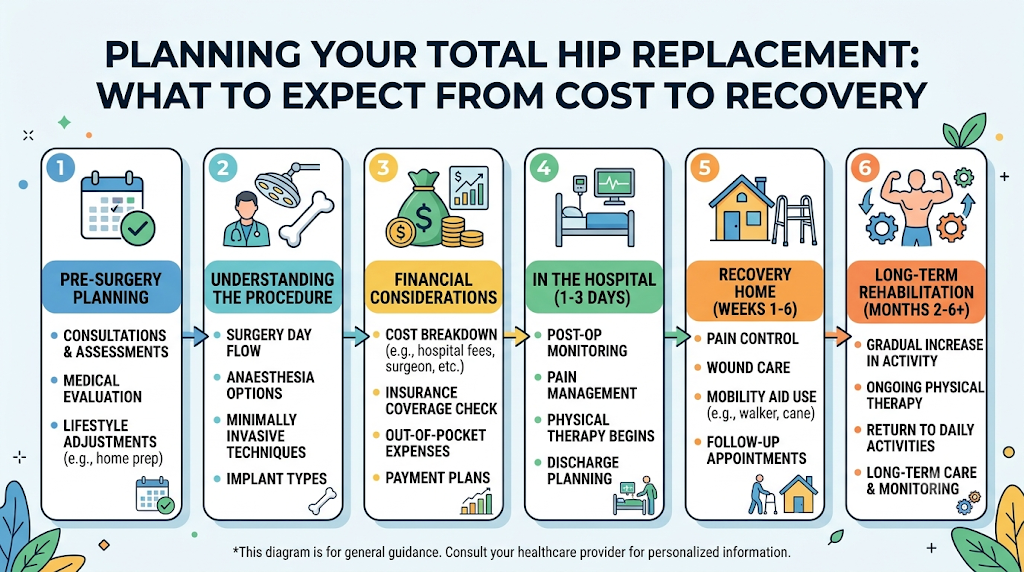
Total hip replacement is a common surgical procedure that replaces damaged parts of the hip joint with artificial components. Doctors may consider this surgery when severe hip pain and stiffness limit your daily activities. Before opting for surgery, non-surgical options like medicines, physical therapy, and lifestyle changes are usually tried first.
When considering an operation, patients often focus on three main areas: overall cost, surgical safety, and the recovery timeline. Understanding these factors helps you make well-informed decisions about your health. It is always important to discuss your symptoms, implant options, safety measures, and expected expenses with a qualified orthopaedic surgeon.
Understanding Total Hip Replacement Surgery
The hip is a natural ball-and-socket joint that supports your weight and allows fluid movement. The ball sits at the top of the thighbone, while the socket forms part of the pelvis.
During surgery, a doctor removes damaged bone and worn cartilage from the joint. Artificial parts, known as prostheses, replace the worn surfaces to rebuild the joint. Replacing both the ball and socket is medically known as total hip arthroplasty. This procedure helps reduce long-term joint pain and improves your ability to walk and move.
When Might a Patient Need Total Hip Replacement?
Several medical conditions can cause serious damage to the hip joint over time.
Osteoarthritis
Osteoarthritis is an age-related wear-and-tear condition where smooth joint cartilage gradually breaks down. This loss of cushioning leads to bone rubbing against bone, causing pain and stiffness.
Rheumatoid Arthritis
Rheumatoid arthritis is an inflammatory condition that causes chronic joint swelling. Over time, this inflammation destroys joint cartilage and damages the underlying bone.
Avascular Necrosis
Avascular necrosis happens when blood supply to the ball of the thighbone decreases. Lacking adequate blood flow, the bone tissue dies and the joint surface may collapse.
Hip Fractures
Severe falls or sudden injuries can break the hip joint. Severe fractures often disrupt blood supply or shatter the bone, making full joint replacement necessary.
Other Hip Joint Conditions
Developmental hip issues, childhood joint disorders, or past injuries can also cause early joint breakdown. Doctors evaluate surgery when severe pain limits daily life and simpler treatments no longer offer relief.
Common Signs That May Lead to Hip Replacement Evaluation
Persistent hip problems can make daily routines difficult and uncomfortable.
- Ongoing pain in the hip, groin, or thigh.
- Pain that worsens while walking, standing, or exercising.
- Severe joint stiffness after sitting or waking up.
- Difficulty climbing stairs or walking uphill.
- Trouble sitting down or getting out of deep chairs.
- Difficulty bending down to put on shoes or socks.
- Reduced ability to manage work or household tasks.
- Persistent joint pain that disrupts restful sleep.
Types of Hip Replacement Surgery
Different types of hip procedures address specific joint problems.
Total Hip Replacement
Total hip replacement is the standard procedure where surgeons replace both the worn ball and socket with artificial parts.
Partial Hip Replacement
Partial hip replacement replaces only the damaged ball at the top of the thighbone, leaving the natural socket intact. Doctors usually reserve this method for specific types of hip fractures in older patients.
Revision Hip Replacement
Revision surgery repairs or replaces artificial joint parts from a previous surgery that have worn out, loosened, or become infected over time.
How Total Hip Replacement Surgery Is Performed
Surgeons follow structured steps during a total hip procedure.
- Completing final pre-surgery checks and prepping the surgical area.
- Administering anesthesia to ensure you remain pain-free during the operation.
- Making a surgical incision to access the hip joint clearly.
- Removing damaged bone and worn cartilage from the joint surfaces.
- Preparing and inserting the artificial socket component into the pelvis.
- Preparing the thighbone to hold the artificial stem and ball.
- Testing joint movement, flexibility, and stability.
- Closing the incision with sutures or staples and moving you to recovery.
Hip Implant Types and Materials
Artificial hip joints are made from strong, biocompatible materials designed to move smoothly.
- Metal components like titanium or cobalt-chrome alloys for structural strength.
- Smooth ceramic components that resist surface wear.
- Polyethylene, a durable medical-grade plastic used to line the socket.
- A replacement stem placed securely inside the thighbone.
- A replacement ball and socket shell that recreate joint movement.
Questions to Ask Your Surgeon About Implants
- Which implant type and material do you recommend for me?
- Why is this specific design suitable for my age and lifestyle?
- What are the long-term benefits and potential risks of this implant?
- How long can I expect this artificial joint to last?
- What follow-up checks will I need to monitor the implant?
Total Hip Replacement Cost: What Patients Should Know
The total cost of hip replacement varies depending on several clinical and administrative factors.
- The location, reputation, and facility type of the hospital.
- Professional fees for the chief surgeon and surgical team.
- Specialized fees for the anesthesiologist and pain team.
- The brand, material type, and design of the chosen hip implant.
- The room category selected and the total length of the hospital stay.
- Required pre-surgery diagnostic scans and lab tests.
- Prescription medicines, blood products, and surgical supplies.
- In-hospital physiotherapy and early rehabilitation sessions.
- Planned post-discharge follow-up visits and wound care.
Factors That Affect Total Hip Replacement Cost
| Cost Component | What Patients Should Check |
| Surgeon fees | Are consultation, surgery, and post-op visit fees included? |
| Anesthesia | Is the anesthesiologist charge part of the main bill? |
| Hip implant | Which implant model and material are covered in the quote? |
| Hospital stay | How many room days and nursing charges are included? |
| Medical tests | Are pre-surgery scans, X-rays, and blood tests covered? |
| Medicines | Are inpatient drugs and take-home medicines included? |
| Physiotherapy | Are early rehabilitation sessions part of the estimate? |
| Follow-up care | Are post-discharge review visits covered in the package? |
| Extra expenses | What charges apply if unexpected medical care is needed? |
Always request a clear, written cost estimate before admission. Check if the quote covers all doctor fees, implant costs, room charges, and follow-up care to avoid unexpected expenses.
Factors That May Affect Total Hip Replacement Expenses
| Factor | How It May Affect Cost |
| Hospital choice | Facility charges and room rates differ between hospitals. |
| Surgeon experience | Senior specialists may charge higher professional fees. |
| Implant selection | Advanced ceramic or specialized implants cost more than basic models. |
| Room category | Selecting a private room increases total daily hospital charges. |
| Medical condition | Complex health issues require extra pre-op tests and monitoring. |
| Hospital stay | Staying extra days for observation adds to the final bill. |
| Rehabilitation | Extended physical therapy sessions increase total expenses. |
| Complications | Managing unexpected health events raises overall treatment costs. |
Safety Measures Before Total Hip Replacement
Surgeons use thorough medical evaluations before surgery to minimize risk.
- Reviewing your full medical history, past surgeries, and allergies.
- Conducting physical exams to test joint motion and muscle strength.
- Running blood tests to check blood counts, kidney function, and clotting.
- Performing heart checks like an ECG to confirm surgical fitness.
- Taking clear X-rays or MRI scans of the hip joint.
- Reviewing current prescription drugs, blood thinners, and supplements.
- Managing blood sugar levels in patients with diabetes.
- Screening for active infections in the skin, teeth, or urinary tract.
Possible Risks and Complications of Hip Replacement
Like any major surgery, hip replacement carries potential health risks.
Infection
Infections can occur near the skin incision or deeper around the artificial implant, requiring antibiotics or additional treatment.
Blood Clots
Blood clots may form in leg veins after surgery. Early movement and prescribed blood thinners help lower this risk.
Hip Dislocation
The artificial ball can pop out of its socket during early healing. Following movement guidelines helps prevent dislocation.
Bleeding
Some blood loss is normal during joint surgery, but occasionally patients may need a blood transfusion.
Leg Length Difference
Surgeons aim for equal leg length, but muscle tightness or bone changes may cause a slight difference after surgery.
Implant Loosening or Wear
Over many years, artificial joint components can wear down or loosen, potentially requiring revision surgery.
Fracture Around the Implant
Bones near the implant can crack during or after surgery, which may require extra fixation.
Continued Pain or Stiffness
While most patients gain significant relief, a small number may still experience minor lingering discomfort or stiffness.
How Patients Can Prepare for Surgery
Taking active steps before your operation improves safety and recovery.
- Complete all medical tests recommended by your doctor.
- Provide your surgical team with a full list of current medicines.
- Follow your surgeon’s advice regarding stopping specific medicines before surgery.
- Stop smoking and limit alcohol intake to aid tissue healing.
- Perform gentle pre-surgery exercises if advised by a physical therapist.
- Arrange for a family member or caregiver to help you at home.
- Set up a safe living space on one floor to avoid early stair climbing.
- Arrange clear transport to and from the hospital.
What Happens Immediately After Hip Replacement Surgery?
Right after surgery, your care team focuses on safe, early recovery steps.
- Monitoring your blood pressure, pulse, and oxygen levels in the recovery room.
- Managing pain using prescribed medications or nerve blocks.
- Checking the surgical dressing and wound drainage regularly.
- Assisting you to sit up, move your ankles, and stand safely.
- Helping you take your first steps using a walker or crutches.
- Teaching you safe ways to get in and out of bed.
- Guidance from a physiotherapist on simple foot and leg exercises.
Total Hip Replacement Recovery: What to Expect
Healing occurs gradually over several weeks and months.
First Few Days After Surgery
You will focus on pain control, wound care, and short walks down hospital hallways with support staff.
First Few Weeks
At home, you will use a walker or crutches, perform daily rehabilitation exercises, and attend your first wound check visit.
One to Three Months
You will gradually transition off walking aids, build leg muscle strength, and return to light daily activities and driving.
Long-Term Recovery
Joint strength, balance, and endurance continue to improve for up to a year as you enjoy low-impact activities.
Total Hip Replacement Recovery Overview
| Recovery Stage | General Focus | Support Patients May Need |
| First few days | Pain control, safe standing, and short walks | Hospital staff and a walking frame |
| First few weeks | Wound healing, home mobility, and light exercises | Caregiver assistance and crutches or walker |
| One to three months | Building muscle strength and walking unassisted | Outpatient physical therapy and progress checks |
| Later months | Returning to full daily tasks and low-impact hobbies | Ongoing home exercises and regular checkups |
Role of Physiotherapy After Hip Replacement
Physical therapy is essential for rebuilding movement, muscle strength, and confidence.
- Restoring a full, comfortable range of motion in the new hip joint.
- Strengthening the gluteal and thigh muscles that support the hip.
- Helping you regain a smooth, natural walking pattern.
- Improving overall balance to prevent falls during early healing.
- Teaching safe techniques for sitting, standing, and climbing stairs.
- Reducing joint stiffness through guided, safe movements.
- Helping you safely return to low-impact sports like swimming or walking.
Home Care and Safety During Recovery
Modifying your living space prevents falls and protects your new hip.
- Remove loose floor rugs, mats, and electrical cords from walkways.
- Keep everyday items within easy reach to avoid excessive bending.
- Sit in firm chairs with high seats and sturdy armrests.
- Install secure grab bars inside the shower or bath area.
- Use a raised toilet seat to avoid bending your hip past 90 degrees.
- Keep all hallways, entrances, and staircases well-lit.
- Arrange for help with meal prep, cleaning, and shopping during early weeks.
- Strictly follow the movement rules recommended by your surgeon.
Warning Signs After Hip Replacement
Contact your doctor right away if you notice signs of potential complications.
- High fever, severe chills, or sudden sweating.
- Increasing redness, swelling, or foul-smelling drainage from the wound.
- Sharp, worsening pain that medicine does not relieve.
- New tenderness, warmth, or swelling in your calf or leg.
- Sudden inability to put weight on your operated leg.
- A sudden change in leg position or a feeling that the hip has dislocated.
- Emergency alert: Sudden chest pain, shortness of breath, or coughing up blood requires immediate emergency medical care.
How Long Can a Hip Replacement Last?
Modern artificial hip joints are durable, but their lifespan varies based on several factors.
- The quality and wear resistance of the implant materials.
- Precise surgical placement and alignment of joint parts.
- Patient age, body weight, and overall physical activity level.
- Underlying bone quality and density supporting the implant.
- Attending routine follow-up visits to monitor joint condition over time.
While many modern hip implants function well for 15 to 20 years or more, no individual timeline can be guaranteed. Keeping up with routine checks helps spot joint wear early.
Questions Patients Should Ask Before Hip Replacement Surgery
Take these important questions to your pre-surgery consultation:
- Why is total hip replacement the best choice for my condition?
- Are there any non-surgical treatments I have not tried yet?
- Which specific implant design and material do you recommend for me?
- What are the main surgical risks based on my health history?
- What type of anesthesia will be used during the operation?
- How many days will I need to stay in the hospital?
- What total expenses does the cost estimate cover?
- How long will I need professional physical therapy after surgery?
- When can I safely drive, return to work, and walk without help?
- What specific movement precautions must I follow at home?
- Which warning signs should prompt me to call your clinic?
How HipHospitals Can Help Patients Understand Hip Replacement
HipHospitals offers clear, reliable educational resources to help patients understand joint conditions, treatment options, surgery costs, and recovery expectations. Access to accurate medical information makes it easier to navigate your treatment options with confidence.
Reviewing educational guides helps you prepare meaningful questions for your clinical team. When severe hip pain limits your quality of life, consulting a qualified orthopaedic surgeon is the best step toward finding lasting relief and regaining your mobility.
Frequently Asked Questions (FAQs)
What is total hip replacement surgery?
Total hip replacement is a surgical procedure where a damaged hip ball and socket are replaced with artificial metal, ceramic, or plastic components to relieve pain and restore motion.
Who may need a total hip replacement?
People with severe hip joint damage from osteoarthritis, rheumatoid arthritis, avascular necrosis, or fractures who no longer get relief from non-surgical treatments may need surgery.
What factors affect the cost of total hip replacement?
Costs depend on hospital choice, surgeon fees, implant materials, room category, length of stay, diagnostic tests, and physical therapy needs.
Is total hip replacement a safe procedure?
Yes, total hip replacement is a common, highly successful surgery. However, like any major operation, it carries minor risks that surgeons evaluate beforehand.
What are the common risks of hip replacement surgery?
Potential risks include wound infection, blood clots in the legs, joint dislocation, slight leg length differences, and long-term implant wear.
Which implant materials are used in total hip replacement?
Implants use combinations of medical-grade metals (titanium), durable ceramics, and strong polyethylene plastics for smooth, long-lasting movement.
How long does recovery after hip replacement take?
Initial recovery takes 4 to 6 weeks for basic daily tasks, while full muscle strength, balance, and joint recovery continue for 6 to 12 months.
When can patients walk after total hip replacement?
Most patients start standing and taking short steps with a walker or crutches within 24 hours after surgery under physical therapy supervision.
Is physiotherapy needed after hip replacement surgery?
Yes, physical therapy is essential to rebuild leg strength, restore joint flexibility, improve balance, and guide you in walking safely without aids.
How long can an artificial hip joint last?
Most modern hip implants last between 15 and 20 years or more, depending on activity levels, body weight, implant type, and overall joint care.
Conclusion
Total hip replacement is an effective medical option for individuals living with severe hip damage, chronic pain, and limited movement. Understanding the surgical process, cost factors, safety measures, and recovery stages empowers you to make confident choices about your health.
While surgery carries potential risks and requires dedicated rehabilitation, it offers significant long-term pain relief for most patients. Always consult a qualified orthopaedic surgeon to discuss your symptoms, explore your options, and create a care plan tailored to your needs.