Introduction
Hip pain can make simple daily tasks like walking, climbing stairs, or even sitting down uncomfortable. It is a common health issue that affects people of all ages. Hip pain can have many possible causes, ranging from simple muscle strain and daily overuse to joint problems and age-related changes. Understanding why hip pain happens and what might be causing it can help you take better care of your body and know when it is time to seek professional medical advice.
Why Does Hip Pain Happen?
The hip is a large and strong ball-and-socket joint that supports much of your body weight. It is made of bones, cartilage, muscles, tendons, ligaments, and fluid-filled sacs that help everything move smoothly.
Because the hip works hard every time you move, pain can develop when any of these parts become irritated, strained, or injured. Daily activities, sports, poor movement habits, and certain health conditions can also contribute to discomfort. Since every person’s body is different, the exact cause of hip pain can vary greatly from one individual to another.
Common Causes of Hip Pain
Most hip discomfort relates to physical activity, overuse, or minor injuries. The most common causes include:
- Muscle strain: Overstretching hip or thigh muscles during physical effort or exercise.
- Tendon irritation: Straining the tough cords that attach muscles to bones.
- Overuse: Doing too much physical work or exercise without giving the body time to rest.
- Sports injuries: Twists, sudden turns, or impacts during physical games or workouts.
- Falls or other accidents: Impact to the hip area from tripping or falling.
- Repeated physical activity: Doing tasks that require repetitive bending or lifting.
- Poor movement habits: Moving or standing in ways that place extra stress on the hip joint.
- Long periods of inactivity: Remaining seated or inactive for too long, leading to stiff muscles.
Hip Conditions That May Cause Pain
Sometimes, hip pain is linked to specific medical conditions affecting the joint structures. These conditions are important to understand, though not every case of hip pain means a serious problem. They include:
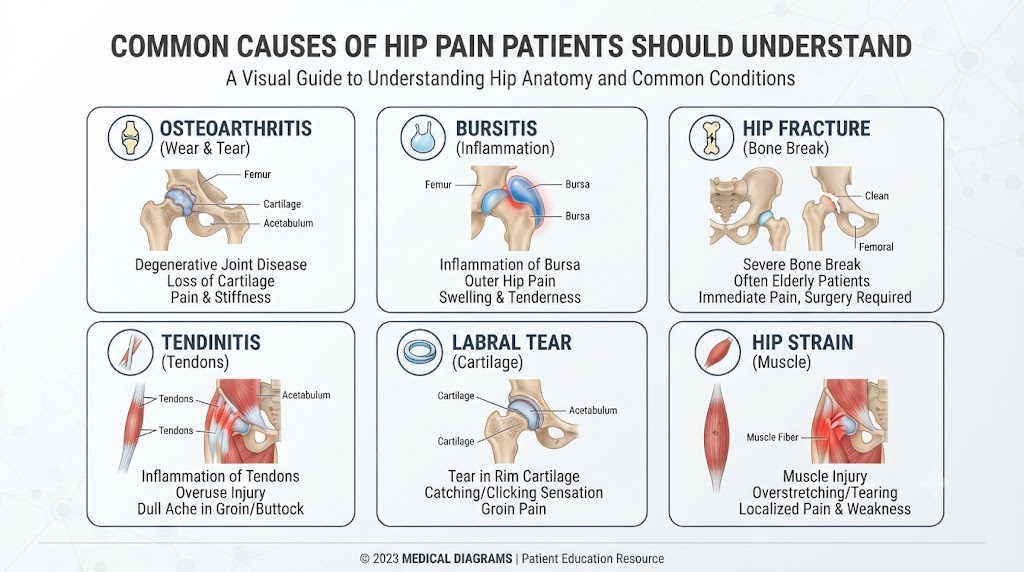
- Osteoarthritis: Wear and tear of the smooth cartilage that cushions the hip joint over time.
- Bursitis: Inflammation of the small, fluid-filled sacs that cushion the hip bones.
- Tendinitis: Irritation or inflammation of the tendons around the hip.
- Hip labral tears: Damage to the ring of cartilage that follows the outside rim of the hip socket.
- Hip impingement: When hip bones do not fit together perfectly, causing friction during movement.
- Hip fractures: Breaks in the upper part of the thigh bone, often related to falls or weakened bones.
- Avascular necrosis: A temporary or permanent loss of blood supply to the bone tissue in the hip.
Lifestyle Factors That May Affect Hip Pain
Your daily habits and routines play a major role in your joint health. Several lifestyle factors may contribute to hip discomfort:
- Long periods of sitting: Staying seated at a desk or couch for hours without breaks.
- Lack of regular movement: Not getting enough daily physical activity to keep muscles strong.
- Repetitive activities: Performing the same physical movements every day without variation.
- High-impact activities: Running or jumping hard on unsupportive surfaces without proper training.
- Poor movement habits: Walking or standing with an unbalanced posture.
- Muscle weakness: Lacking strong core and leg muscles to support the hip joint.
- Excess body weight: Placing extra mechanical stress and load on the hip joints.
Making small, positive changes to your daily routine can often help reduce strain and protect your hips.
Possible Cause and Simple Explanation
| Possible Cause | Simple Explanation | Example |
|---|---|---|
| Muscle strain | A muscle may become overstretched or irritated | Exercise or lifting |
| Tendon irritation | A tendon may become painful after repeated use | Repeated activity |
| Osteoarthritis | Joint changes may cause pain and stiffness | Pain during walking |
| Bursitis | A small fluid-filled sac near the joint may become irritated | Pain when lying on the hip |
| Injury | A fall or impact may damage the hip area | Pain after a fall |
Where Can Hip Pain Be Felt?
Hip problems can show up in different areas depending on what is causing the discomfort. Hip-related pain may sometimes be felt in:
- The front of the hip or groin area
- The outer side of the hip or upper thigh
- The buttock area
- Downward into the upper thigh
It is important to remember that the location of pain alone cannot confirm the exact cause. A professional medical assessment is required to figure out where the pain is coming from.
Related Hip Care Resources
- [Explore patient education guides on hip health]([Placeholder for verified HIPHOSPITALS URL])
- [Learn about hip symptoms and care]([Placeholder for verified HIPHOSPITALS URL])
- [Read about when to see an orthopedic specialist]([Placeholder for verified HIPHOSPITALS URL])
When Should Hip Pain Be Taken Seriously?
Most minor hip aches get better with rest, gentle movement, and time. However, certain warning signs mean you should seek prompt medical attention. These include:
- Severe or worsening pain that does not go away
- Hip pain that starts after a major fall or accident
- Inability to put weight on the affected leg
- Significant swelling, redness, or warmth around the joint
- Fever accompanied by severe joint pain
- Numbness, tingling, or weakness in the leg
- Trouble walking or moving the leg normally
- Sudden and intense pain
If you notice any of these serious signs, speak with a healthcare professional right away.
How Doctors Find the Cause of Hip Pain
When you visit a healthcare professional for hip pain, they will review your symptoms and medical history. They may perform a physical examination to check your:
- Hip movement, flexibility, and range of motion
- Walking pattern and balance
- Muscle strength and joint stability
In many cases, a physical exam provides enough information. However, if your doctor needs a closer look, they may recommend imaging tests like an X-ray or MRI scan. The choice of tests depends entirely on your specific symptoms and what the doctor suspects may be causing the issue.
When Should You See a Doctor?
You should consider seeking professional medical advice if:
- Your hip pain continues for a long time without relief
- The pain keeps returning frequently
- Pain affects your ability to walk, stand, or do daily activities
- The pain becomes sharp or severe
- The pain follows a physical injury or fall
- Swelling, stiffness, or locking develops in the joint
- Your symptoms do not improve with simple rest
Getting a proper evaluation ensures you understand your condition and receive the right guidance.
Common Mistakes People Make With Hip Pain
When dealing with hip pain, people sometimes make choices that can slow down recovery or worsen the problem. Common mistakes include:
- Ignoring persistent pain and hoping it goes away on its own
- Staying completely inactive in bed for too long, which can weaken muscles
- Continuing a high-impact activity that clearly increases pain
- Ignoring pain that started after a minor or major injury
- Assuming all hip pain comes from the exact same source
- Ignoring swelling, warmth, or movement restrictions
- Self-treating with medications or remedies without understanding the root cause
Approaching hip pain with care, awareness, and professional guidance helps protect your long-term mobility.
Hip Pain Checklist
- Note when the hip pain first started
- Notice exactly where the pain is felt (groin, side, or thigh)
- Notice what makes the pain better or worse
- Pay attention to any swelling, stiffness, or clicking sounds
- Note any fall or injury before the pain started
- Pay attention to changes in your walking pattern
- Seek medical advice if pain persists or worsens
- Seek prompt care if serious warning signs appear
Frequently Asked Questions
What are the most common causes of hip pain? The most common causes include muscle strains, tendon irritation, overuse, sports injuries, bursitis, and age-related joint wear like osteoarthritis.
Can muscle strain cause hip pain? Yes, overstretching or overusing the muscles around the hip during exercise or physical work can lead to painful strains.
Can arthritis cause hip pain? Yes, osteoarthritis is a common condition where the cartilage in the hip joint wears down over time, causing pain and stiffness.
Can sitting for long hours affect the hips? Yes, sitting for extended periods without breaks can tighten hip flexor muscles and place extra stress on the joint structures.
When should someone see a doctor for hip pain? You should see a doctor if your pain is severe, lasts a long time, keeps returning, affects your walking, or follows a major injury.
Can a hip injury cause long-lasting pain? Yes, untreated or severe injuries from falls or sports can lead to ongoing pain and joint instability if not evaluated properly.
Does every case of hip pain need an X-ray or scan? No, many cases of mild hip pain do not require immediate imaging. Doctors rely on physical exams and order scans only when necessary.
What symptoms may require urgent medical attention? Severe pain after a fall, inability to put weight on the leg, sudden swelling, fever with joint pain, and numbness require prompt medical care.
Conclusion
Hip pain is a frequent challenge that can stem from many sources, including muscle strain, overuse, daily habits, injuries, and joint conditions. While many mild aches improve with rest and self-care, persistent, severe, or unusual symptoms should never be ignored. Understanding the possible causes and knowing when to get help allows you to protect your mobility and overall health. Always discuss ongoing or concerning hip pain with a qualified healthcare professional to receive an accurate evaluation and personal guidance.