Introduction
Modern software development moves fast. Enterprises face constant pressure to release updates quickly. They must also keep their systems reliable and secure. Many Japanese enterprises struggle with traditional IT structures. These old models often slow down delivery and create friction between development and operations teams.
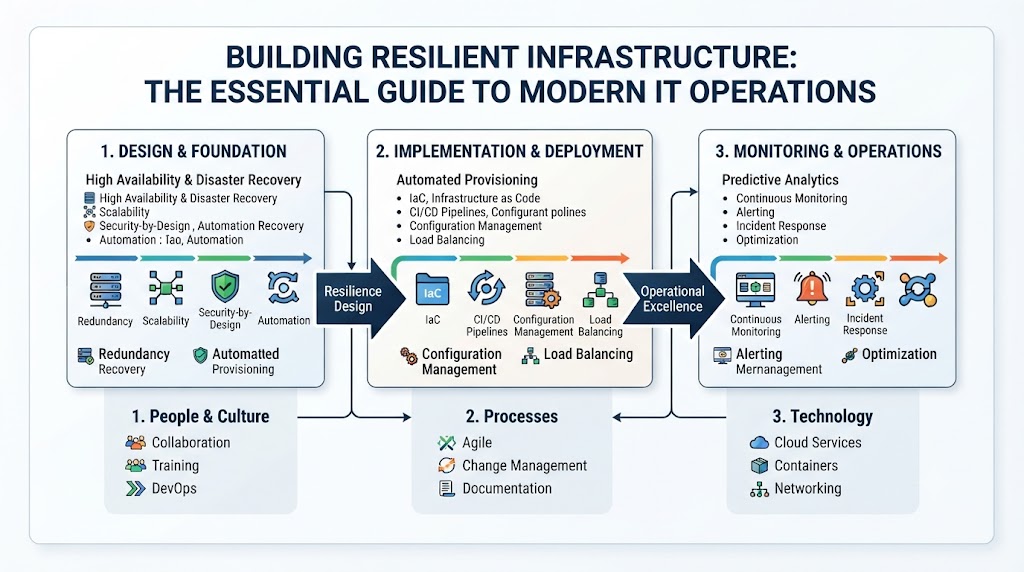
To stay competitive, organizations are shifting toward modern engineering practices. They are adopting automation, cloud-native architectures, and robust infrastructure management. This transition requires more than just new tools. It requires a shift in culture, processes, and technical skills.
This article explores how modern engineering practices transform software delivery. We examine how structured learning, professional advisory services, and continuous technical assistance help engineering teams succeed. We also look at specific methodologies like Kubernetes, Terraform, SRE, DevSecOps, and MLOps.
The Evolution of Software Delivery in Japanese Enterprises
Japanese engineering teams have a long tradition of high-quality software engineering. However, traditional release cycles can be slow. Heavy documentation, manual handoffs, and siloed teams often delay deployment.
Modern software delivery focuses on speed, safety, and feedback loops. Teams need to release small updates frequently. This approach reduces risk. If an error occurs, teams can fix it quickly.
Automation is central to this shift. Continuous Integration and Continuous Delivery pipelines automate testing and deployment. When teams automate repetitive tasks, engineers can focus on building features and solving complex problems.
Enterprise modernization requires careful planning. Organizations must assess their current workflow. They need to identify bottlenecks and train their staff on modern tools. Professional guidance helps teams navigate this transition without disrupting daily operations.
Building Essential Engineering Competencies
Adopting new technologies requires structured learning. Engineers cannot master complex platforms like Kubernetes or Terraform through self-study alone. They need practical, hands-on education.
Organizations invest heavily in team upskilling to close knowledge gaps. Structured programs help engineers understand core principles rather than just memorizing commands. When teams gain deep technical knowledge, they can design resilient systems and troubleshoot issues faster.
Why Corporate Education Matters
Corporate education bridges the gap between theory and practice. Japanese engineering teams often look for structured training programs that fit their business context. Effective programs focus on real-world scenarios. They teach engineers how to handle live environments and manage unexpected failures.
For companies building internal capabilities, structured learning is essential. It ensures that all team members share a common understanding of best practices. This shared knowledge improves collaboration across departments.
Effective corporate education covers several critical areas:
- Core automation workflows
- Container orchestration and management
- Infrastructure as Code principles
- Reliability and incident response
- Secure deployment pipelines
Core Technical Domains in Modern IT
Modern infrastructure relies on several interconnected disciplines. Each discipline addresses a specific challenge in software delivery and system management.
Container Orchestration and Management
Modern applications run in containers. Containers package code and dependencies together. This ensures that software runs the same way in development, testing, and production.
However, managing hundreds or thousands of containers is difficult. Engineers need automated systems to handle scaling and scheduling. Container orchestration platforms automate these tasks across distributed infrastructure.
Teams often need specialized guidance to master container orchestration. Participating in a dedicated Kubernetes 研修 helps engineers learn how to manage container clusters, configure networking, and maintain high availability in production environments.
Infrastructure as Code
Traditional IT infrastructure setup involved manual configuration of physical servers or cloud consoles. This manual process is slow and prone to human error. Two engineers might configure identical servers differently, causing unexpected bugs.
Infrastructure as Code solves this problem. Engineers write code to define infrastructure. They can version control this code just like application source code. This approach makes infrastructure deployment repeatable and consistent.
To build proficiency in this area, teams often complete a structured Terraform 研修. This training teaches engineers how to provision cloud resources safely, manage state files, and automate infrastructure changes across multiple environments.
Reliability and System Stability
As systems grow more complex, maintaining uptime becomes difficult. Users expect applications to be available at all times. Even a brief outage can damage business reputation and customer trust.
System reliability engineering focuses on proactive monitoring, fast incident response, and continuous improvement. Teams set clear performance targets and track error budgets. When issues occur, engineers analyze root causes to prevent future failures.
Adopting these practices requires a shift in mindset. Through an organized SRE 研修, engineers learn how to build resilient systems, automate manual operations, and improve observability across distributed applications.
Security in Modern Pipelines
Security is often treated as a final step before release. This late-stage review slows down deployment. If vulnerabilities are found late, fixing them takes time and effort.
Modern engineering integrates security early in the development lifecycle. Developers write secure code from the start. Automated security scans run inside the CI/CD pipeline. This approach catches vulnerabilities before code reaches production.
To build secure delivery pipelines, organizations benefit from a targeted DevSecOps 研修. This education teaches teams how to implement automated testing, manage secrets securely, and integrate security checks into existing workflows.
Machine Learning Operations
Machine learning models behave differently from traditional software. They require continuous data updates, retraining, and performance monitoring. Managing machine learning lifecycles manually is unsustainable.
Machine learning operations bring DevOps principles to data science. It automates model training, deployment, and monitoring. This ensures that models remain accurate in production.
For data science and engineering teams, a specialized MLOps 研修 provides the skills needed to build robust pipelines, track model versions, and deploy machine learning applications reliably.
Strategic Support and Advisory Services
Technical training is crucial, but teams often face complex challenges that require external expertise. Strategic guidance helps organizations avoid common pitfalls and accelerate their digital initiatives.
Process Assessment and Planning
Many organizations struggle to define their modernization roadmap. They adopt new tools without changing their internal processes. This mismatch often leads to frustration and wasted effort.
Experienced advisors help teams evaluate their current workflows. They analyze existing infrastructure, identify inefficiencies, and design clear improvement plans. This strategic partnership ensures that technology investments align with business goals.
Organizations looking to modernize their engineering practices often utilize professional DevOps コンサルティング to assess their current capabilities, streamline workflows, and implement scalable delivery models.
Navigating Local Enterprise Needs
Every market has unique operational requirements. Japanese enterprises place a strong emphasis on stability, security, and structured collaboration. Implementing modern engineering practices in these environments requires a deep understanding of local business culture.
Corporate training programs must respect existing team structures while introducing new efficiencies. Tailored learning paths help Japanese engineering teams adopt modern practices smoothly without disrupting daily operations.
To support this transition, comprehensive DevOps corporate training Japan programs are designed to address the specific needs of local enterprises, fostering internal skill development and modern delivery practices.
Expert Guidance and Architecture Review
Even skilled engineering teams encounter complex architectural challenges. Migrating legacy systems to the cloud or scaling microservices requires specialized knowledge.
External advisors provide objective assessments of system architecture. They help teams optimize cloud costs, improve system performance, and design fault-tolerant infrastructure.
When enterprises need specialized insights, partnering with an experienced DevOps consultant Japan helps engineering teams design scalable architectures, optimize deployment pipelines, and solve complex technical bottlenecks.
Ongoing Operational Assistance
Initial setup is only the first step. Systems require continuous maintenance, monitoring, and troubleshooting. When unexpected production issues occur, internal teams may need immediate assistance.
Continuous technical support ensures that systems remain stable. Experts help troubleshoot complex errors, resolve performance bottlenecks, and provide guidance during critical incidents.
To maintain high availability and operational continuity, organizations rely on professional DevOps support Japan to receive timely troubleshooting, operational guidance, and continuous system improvement.
Comprehensive Technical Comparison
| Technical Discipline | Primary Focus | Key Benefits | Common Tools |
|---|---|---|---|
| Container Management | Application packaging & scaling | High availability & portability | Kubernetes, Docker |
| Infrastructure as Code | Automated provisioning | Consistency & version control | Terraform, Ansible |
| System Reliability | Uptime & incident response | Better observability & stability | Prometheus, Grafana |
| Secure Delivery | Early vulnerability detection | Reduced security risk & compliance | SonarQube, Trivy |
| Model Operations | Machine learning lifecycle | Reliable model deployment | MLflow, Kubeflow |
Best Practices for Successful Implementation
Implementing modern engineering practices requires careful planning and execution. Organizations can follow several best practices to ensure long-term success.
Start Small and Scale Gradually
Do not try to change everything at once. Pick a single project or service to pilot modern delivery practices. Learn from the pilot, refine the process, and then expand to other teams.
Foster Cross-Functional Collaboration
Break down silos between development, operations, and security teams. Encourage open communication and shared accountability for system performance and security.
Invest in Continuous Learning
Technology evolves rapidly. Encourage engineers to update their skills regularly through hands-on practice, training programs, and knowledge-sharing sessions within the organization.
Automate Incrementally
Identify repetitive manual tasks and automate them one by one. Focus on continuous integration and automated testing first, then move to automated infrastructure provisioning.
Frequently Asked Questions
What is the primary goal of modernizing software delivery?
The primary goal is to release software updates faster, safer, and more reliably while reducing manual effort and operational risk.
Why do engineering teams need structured training?
Structured training helps engineers gain deep practical knowledge of modern tools and methodologies, enabling them to design robust systems and troubleshoot issues effectively.
How does Infrastructure as Code improve system stability?
Infrastructure as Code allows teams to define infrastructure using code. This ensures consistency across environments and eliminates manual configuration errors.
What role does container orchestration play in cloud-native applications?
Container orchestration platforms automate the deployment, scaling, and management of application containers across distributed infrastructure.
How does integrating security early affect development speed?
Integrating security early catches vulnerabilities before code reaches production, reducing costly rework and preventing security incidents later.
What is the difference between DevOps and SRE?
DevOps focuses on cultural collaboration and automating the software delivery lifecycle, while SRE focuses specifically on system reliability, uptime, and incident management.
How do machine learning operations differ from traditional software operations?
Machine learning operations manage the data pipeline, model training, and continuous model monitoring in addition to standard application deployment.
Why is external consulting valuable for enterprise transformation?
External consultants provide objective assessments, specialized expertise, and proven frameworks to help organizations navigate complex architectural and cultural changes.
What should organizations look for in corporate technology education?
Organizations should look for programs that offer hands-on practice, real-world scenarios, and customized learning paths that fit their specific business needs.
Conclusion
Modernizing software delivery and infrastructure is an ongoing journey. It requires a balance of cultural shift, process improvement, and technical proficiency. Organizations that embrace automation, cloud-native architectures, and continuous learning position themselves for long-term success.
Whether through structured education in container management and infrastructure automation, strategic advisory services, or ongoing technical assistance, engineering teams need the right resources to thrive. By focusing on practical skills and reliable execution, Japanese enterprises can build resilient systems that support future growth.