Introduction
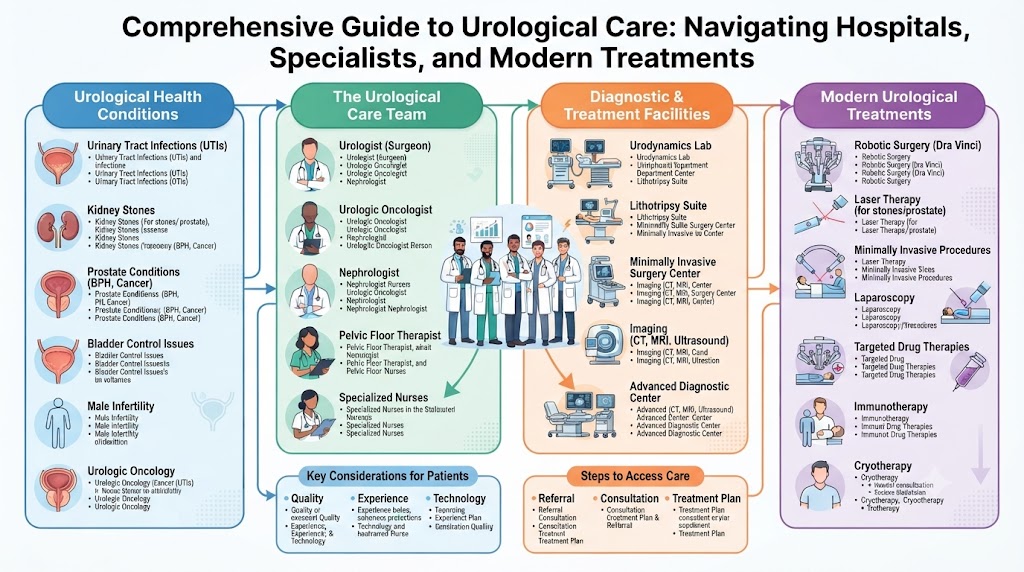
Taking charge of urological health often begins with a single step: sorting through medical information to find the right facilities, trusted physicians, and appropriate therapies. Whether someone is investigating a sudden change in urinary habits or preparing for a specialized surgical procedure, knowing how to evaluate healthcare options is vital. Platforms like UrologyHospitals.com function as informative guides, helping patients connect with qualified care networks, explore complex medical specialties, and understand diagnostic and therapeutic pathways. This article examines the broader world of urological health, outlining how to find specialized medical centers, the spectrum of available treatments, and what patients can anticipate throughout their care journey.
Understanding Urology and Specialized Healthcare
Urology is the medical and surgical discipline dedicated to the urinary tracts of both men and women, alongside the male reproductive organs. This bodily network includes the kidneys, which filter waste; the ureters and bladder, which transport and store urine; the urethra; and the male anatomy encompassing the prostate, testes, and penis. Because these systems handle waste elimination, fluid balance, and reproductive health, any disruption can deeply affect daily comfort and long-term well-being.
Dedicated medical centers and specialized urology hospitals focus intensely on diagnosing and treating these specific conditions using advanced medical technology and targeted clinical expertise. While primary care physicians handle initial screenings, patients frequently require specialist referral when anatomical or functional issues demand advanced intervention. From watchful waiting and medical therapy to complex surgery, comprehensive urological care spans a wide array of patient needs.
Common Symptoms and Warning Signs
Urological conditions display a diverse range of physical signs. Recognizing these indicators early prompts timely medical evaluation. Frequent warning signs include:
- Discomfort and Pain: Burning or stinging sensations during urination, persistent pelvic pressure, or sharp flank and lower back pain.
- Visual Changes in Urine: Blood in the urine (hematuria), cloudy appearance, or unusual odors.
- Altered Urination Patterns: Sudden, intense urges to urinate or waking up repeatedly through the night.
- Flow Difficulties: Hesitancy before starting, a weak or interrupted stream, or a lingering sensation that the bladder is not fully empty.
- Systemic Indicators: Fever, chills, or generalized fatigue when accompanied by urinary discomfort.
These symptoms do not provide a definitive diagnosis on their own, as similar signs can overlap across various conditions. A professional medical assessment is always required to pinpoint the root cause.
Causes and Risk Factors
Urological disorders stem from an intricate mix of biological, environmental, and behavioral factors. While some conditions are tied to genetics or aging, others develop due to underlying health issues. Common influencing factors include:
- Age and Physiological Shifts: Natural anatomical changes, such as prostate enlargement, occur frequently as populations age.
- Hereditary Patterns: Family history can influence predisposition to certain kidney disorders or malignancies.
- Lifestyle and Hydration: Daily water intake, nutritional habits, and physical activity levels heavily influence kidney stone formation and urinary tract health.
- Infections: Bacterial invasion remains a leading trigger for acute inflammation and tract infections.
- Structural Variations: Anatomical anomalies can obstruct normal fluid drainage.
Identifying these factors allows patients and physicians to recognize risks early and adopt preventive or proactive management plans.
Diagnosis and Medical Evaluation
An accurate diagnosis serves as the anchor for successful urology treatment. Specialists deploy a variety of diagnostic tools depending on the patient’s presentation:
- Clinical History and Physical Exam: A detailed review of symptoms, medical background, and targeted physical evaluations.
- Laboratory Analysis: Urinalysis to detect infection markers, and blood tests such as prostate-specific antigen (PSA) checks.
- Advanced Imaging: Ultrasounds, computed tomography (CT) scans, and magnetic resonance imaging (MRI) to map internal organ structures.
- Cystoscopy: A specialized diagnostic procedure allowing direct visualization of the urethra and bladder interior via a thin, illuminated scope.
- Urodynamic Studies: Assessments that measure how efficiently the bladder stores and releases fluid.
Each diagnostic step yields precise insights, enabling clinical teams to customize care strategies for individual needs.
Urology Treatment Options
Therapeutic approaches in urology span a broad spectrum, customized to the diagnosis, disease severity, and patient health profile. Management strategies generally include:
| Treatment Option | Common Use Cases | Potential Benefits | Important Considerations |
| Observation and Lifestyle Adjustments | Mild, early-stage, or asymptomatic findings | Avoids procedural risks, promotes overall health | Demands consistent follow-up and tracking |
| Medical Management | Infections, symptomatic benign conditions, early stone control | Non-invasive, relieves symptoms, halts progression | Depends on strict adherence and side-effect management |
| Minimally Invasive Procedures | Kidney stones, localized obstructions, tissue removal | Shorter recovery periods, reduced hospital stays | Applicability depends heavily on anatomy and stone dimensions |
Therapeutic decisions are uniquely tailored, carefully balancing clinical advantages against potential risks under expert guidance.
Role of Urology Specialists in Diagnosis and Treatment
Urologists are specialized physicians trained to diagnose, manage, and surgically correct disorders of the urinary system and male reproductive organs. Their clinical scope covers several key areas:
- Precision Diagnosis: Interpreting complex imaging, lab findings, and diagnostic tests.
- Tailored Care Planning: Designing individual strategies ranging from conservative monitoring to major surgery.
- Surgical Execution: Performing traditional open operations alongside advanced, minimally invasive techniques.
- Long-Term Monitoring: Managing chronic conditions, supporting recovery, and guiding patient health literacy.
Working hand-in-hand with primary care networks and other medical specialties, urologists ensure comprehensive, patient-centered healthcare delivery.
Kidney Stone Treatment
Kidney stones develop when hard mineral and salt deposits crystallize inside the kidneys, potentially traveling down the urinary tract and causing intense discomfort. Symptoms often feature sharp flank pain radiating toward the groin, blood in the urine, and nausea.
Management plans depend directly on the stone’s size, composition, and placement. Tiny stones frequently pass naturally with heavy hydration and pain control. Larger or obstructing formations may require shock wave lithotripsy to shatter the stone, ureteroscopy, or percutaneous nephrolithotomy for complex cases. Prevention counseling, emphasizing dietary adjustments and hydration, remains crucial for avoiding recurrence.
Prostate Cancer Treatment
Prostate cancer stands as one of the most frequently diagnosed malignancies among men. Initial detection typically relies on routine screening blood tests, physical examinations, and targeted tissue biopsies.
Because prostate cancer progression rates vary widely, treatment plans are highly individualized. Options range from active surveillance for low-risk, slow-developing tumors to surgical resection (prostatectomy), radiation therapy, and systemic medications like hormone therapy. Selection is guided by tumor stage, grade, general health, and personal patient preference.
Enlarged Prostate Treatment
Benign prostatic hyperplasia (BPH)—commonly known as an enlarged prostate—is a non-malignant condition frequently seen in older men. As the prostate grows, it can compress the urethra, producing frustrating urinary symptoms like a weak stream, sudden urgency, and frequent nighttime bathroom trips.
Management often begins with watchful waiting or lifestyle modifications. When symptoms heavily interfere with daily living, medical therapies designed to relax prostate tissue or decrease its volume can be prescribed. Minimally invasive procedures and surgical options are also available to clear urinary blockages when medications fall short.
Urinary Tract Infection Treatment
Urinary tract infections (UTIs) happen when bacteria invade the urinary system, triggering inflammation and discomfort. Common signs include a burning sensation during urination, cloudy or discolored urine, and persistent pelvic ache.
Diagnosis typically involves urine testing and culture to isolate the specific bacterial strain. Standard management utilizes targeted antibiotic regimens prescribed by a clinician. For individuals suffering from recurrent infections, specialists investigate underlying anatomical or functional triggers to stop future flare-ups.
Bladder Cancer Treatment
Bladder cancer begins in the inner lining of the bladder and frequently announces itself with blood in the urine or altered voiding habits. Diagnostic workflows routinely incorporate cystoscopy and tissue biopsy.
Treatment strategies depend heavily on whether the tumor is non-muscle-invasive or muscle-invasive. Interventions can range from transurethral resection and intravesical drug delivery straight into the bladder to radical surgical removal (cystectomy) combined with systemic therapies. Diligent post-treatment monitoring is indispensable.
Robotic Urology Surgery
Robotic-assisted surgery marks a significant technological advancement in urological procedures. In this setup, a surgeon sits at a console controlling specialized robotic instruments, gaining high-definition 3D visualization and exceptional mechanical dexterity.
Robotic techniques are widely applied in operations like radical prostatectomy, partial nephrectomy, and complex reconstructive surgeries. Potential benefits include smaller incisions, minimized blood loss, and quicker recovery timelines. Nevertheless, clinical success depends heavily on the specific medical situation and the hands-on experience of the surgical team.
Choosing the Right Urology Hospital
Evaluating a healthcare facility involves weighing several core criteria to guarantee high standards of patient safety and clinical excellence:
- Specialist Depth: Presence of board-certified urologists and multi-disciplinary medical teams.
- Diagnostic Infrastructure: Access to modern imaging, laboratory diagnostics, and urodynamic testing tools.
- Service Scope: Comprehensive care paths spanning conservative monitoring, endoscopic techniques, and advanced surgical capabilities.
- Institutional Standards: Compliance with stringent infection-control protocols, safety accreditations, and transparent communication practices.
Informational platforms like UrologyHospitals.com assist patients in exploring hospital environments and understanding the infrastructure required for specialized medical care.
Finding a Urologist Near You
Pinpointing a nearby specialist involves identifying medical professionals possessing the right expertise and hospital credentials to manage specific conditions. Patients should evaluate:
- Clinical Focus: Whether the physician holds specific expertise in treating the particular condition.
- Access to Facilities: Proximity to advanced diagnostic centers and affiliated urology hospitals.
- Communication Approach: Finding a practitioner who listens attentively and translates complex diagnoses into clear, understandable terms.
- Second Opinions: Seeking additional expert evaluations before committing to major medical or surgical interventions.
Questions to Ask a Urologist
Carrying structured, thoughtful questions into a consultation empowers patients to actively participate in their medical decisions. Useful inquiries include:
- What is the exact diagnosis, and what does it mean for my overall health?
- Are additional diagnostic tests necessary, and what will they reveal?
- What treatment pathways are available, covering both non-surgical and surgical options?
- What are the anticipated benefits, potential risks, and recovery timelines for each path?
- What lifestyle modifications or follow-up schedules should I anticipate?
When to Seek Medical Attention
While many urological disorders evolve gradually, certain symptoms demand immediate or emergency medical intervention. Seek urgent care if experiencing:
- An absolute inability to urinate (acute urinary retention).
- Severe, sudden abdominal or flank pain.
- Visible, heavy bleeding within the urine.
- High fever accompanied by urinary symptoms or severe chills.
Practical Tips for Preparing for a Urology Consultation
Maximizing the effectiveness of a medical visit requires organized preparation:
- Bring a complete, updated list of current medications, supplements, and dosages.
- Compile a chronological timeline of symptom onset and progression.
- Gather previous medical records, imaging CDs, and laboratory reports.
- Write down specific questions and primary concerns to address during the consultation.
Common Challenges in Urological Care
Patients navigating urological health frequently encounter hurdles such as delayed recognition of subtle symptoms, anxiety surrounding diagnostic procedures, or confusion over intricate medical jargon. Overcoming these barriers relies on transparent communication with healthcare providers, leveraging trusted educational platforms, and seeking structured guidance from seasoned specialists.
Best Practices for Patients
- Never ignore persistent urinary changes or ongoing discomfort.
- Keep personal medical records and previous test reports neatly organized.
- Follow prescribed treatment plans and follow-up schedules meticulously.
- Seek second opinions when weighing major surgical procedures.
Frequently Asked Questions
What types of conditions do urology hospitals typically handle?
Urology hospitals and specialized care centers manage a wide range of disorders affecting the kidneys, bladder, ureters, urethra, and male reproductive system, including kidney stones, prostate conditions, urinary tract infections, and urological cancers.
Why is specialist evaluation important for urinary symptoms?
Similar symptoms frequently stem from vastly different underlying causes. Specialists deliver accurate diagnoses using advanced technology and design custom treatment plans tailored to an individual’s unique health history.
Is surgery always necessary for kidney stones?
No. Small kidney stones often pass on their own with increased fluid intake and conservative management. Surgical or minimally invasive procedures are typically reserved for larger stones, persistent blockage, or unmanaged pain.
How does benign prostatic enlargement differ from prostate cancer?
Benign prostatic enlargement (BPH) is a non-cancerous growth of the prostate gland frequently seen in older men, whereas prostate cancer involves malignant cellular mutations. Though their symptoms can overlap, they are entirely separate clinical entities requiring distinct diagnostic strategies.
What advantages does robotic-assisted surgery offer?
Robotic platforms provide surgeons with superior visualization and precision during intricate procedures. Potential patient benefits can include smaller incisions, reduced blood loss, and faster recovery times, though suitability depends on individual clinical factors.
How should a patient prepare for their initial urology appointment?
Patients should compile a detailed symptom history, a complete list of current medications, prior lab or imaging reports, and a written set of questions concerning their diagnosis and treatment options.
When do urological symptoms constitute a medical emergency?
Situations involving the complete inability to urinate, severe heavy bleeding in the urine, unbearable flank pain, or high fevers paired with urinary symptoms require emergency medical evaluation.
Can lifestyle modifications help prevent kidney stones or recurrent UTIs?
Yes. Maintaining proper hydration, adopting balanced nutritional habits, and managing underlying risk factors can significantly lower the likelihood of developing specific kidney stones and recurrent urinary tract infections.
Conclusion
Comprehending urological health and navigating the broader medical system requires reliable information, thoughtful evaluation, and guidance from qualified professionals. From recognizing early warning symptoms and securing precise diagnoses to exploring diverse treatment pathways, patient education remains a cornerstone of successful care. Resources like UrologyHospitals.com help individuals understand specialized services and find appropriate care directions. Persistent, worsening, or severe symptoms should always be evaluated by a qualified healthcare professional to ensure safe, effective management.